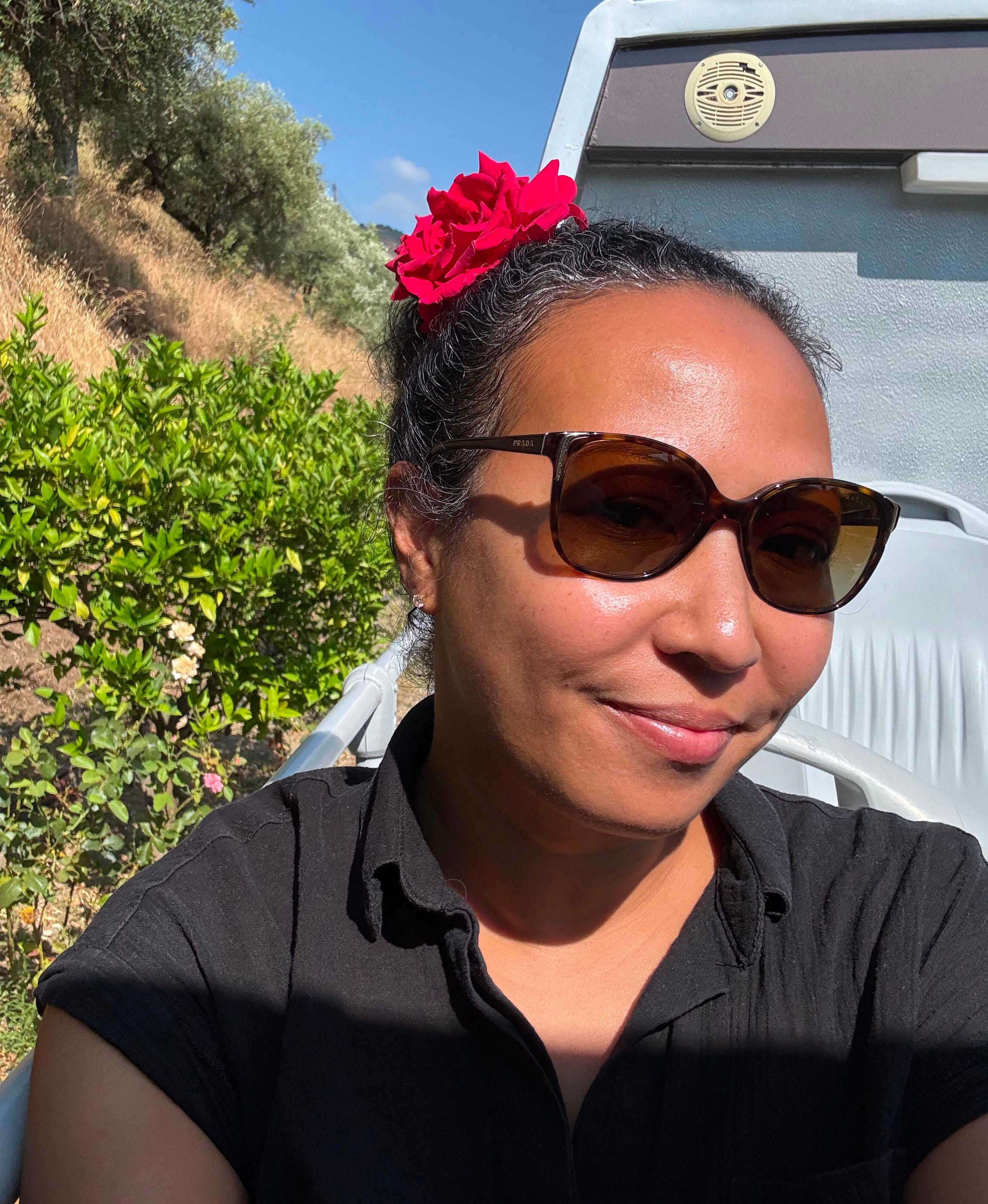
For those who are new or reading from the web version, welcome to Never Precious. I’m Tyeesha Dixon — lawyer, writer, food obsessed — here chronicling food traditions, cultures, and recipes worth preserving before they’re gone. To get our stories emailed to you every other week:
I’m not a great photographer, but for Issue 2, I tried a more image-forward format to mix things up a bit — let me know what you think. The essay takes you on my month-long adventure in Porto, Portugal, and how a craving for fish sauce helped me connect with the city in unexpected ways.
BUT BEFORE I FORGET…
You early subscribers are some real ones! Your feedback has been so thoughtful and engaging, and I thank you from the bottom of my heart for trusting me to share your families’ food stories ❤️.
As a special MUAH to you earliest supporters, I’m running a Mother’s Day tribute next week honoring your moms and caretakers. If you haven’t sent me your story but would like to, it’s not too late — submit it here.
Any submissions received by May 5 will be included in the Mother’s Day issue. Any submitted after May 5 will be included in a future Never Precious publication.
If you’re not sure whether you’re ready to submit, or don’t know where to start, reach out to chat by replying to this post or sending a note to tye@neverprecious.com.
NOW, THE STORY.
Last summer, I spent a month in Portugal, based in Porto. I’d just moved out of my D.C. apartment. I had no plan, really, but the universe was calling me to this place I’d yearned to experience for many years.
The first night, I set out to find an easy late-night dinner. Generally, when I’m hungry and don’t know what I’m looking for, I let my nose choose for me.
I ended up eating exactly what I was supposed to that night.
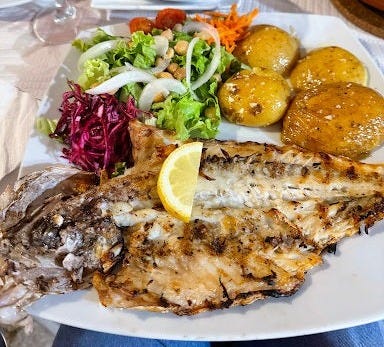
It was the classic Porto meal: grilled sea bream charred hard at the edges, unexpectedly flavorful boiled potatoes, a basket of bread, and a (whole) carafe of vinho. A simple veg, to boot.
That dang soup.
Needless to say, I had arrived in Portugal. But it was not long before I was looking for pho.
Nine days, to be exact.
That the craving had followed me across an ocean was not shocking; I’ve learned over the years that it holds no geographic bounds.
You can read about my not-so-secret love affair with pho, the humble yet decadent Vietnamese noodle soup, in Issue 1.
What I didn’t expect was everything that came next.
I suspect I’m not the only person here who does their deepest thinking over bowls of soup. The circle is the oldest symbol of continuity, wholeness, return. Every culture has a version of it: the ouroboros (snake eating its tail); the Buddhist enso; the Celtic knotwork; the Indigenous medicine wheel; the Islamic geometric patterns that tile infinitely; the sun…
The core meanings show up across traditions: eternity, cycles, completion, protection, unity.
As I sat in a modest Vietnamese eatery in Central Porto lusting over my steamy bowl of soup, I decided right then and there I would set out to learn why the universe sent me to Porto. Why I needed pho nine days in.
And how on earth the pho in Porto was so damn good?!


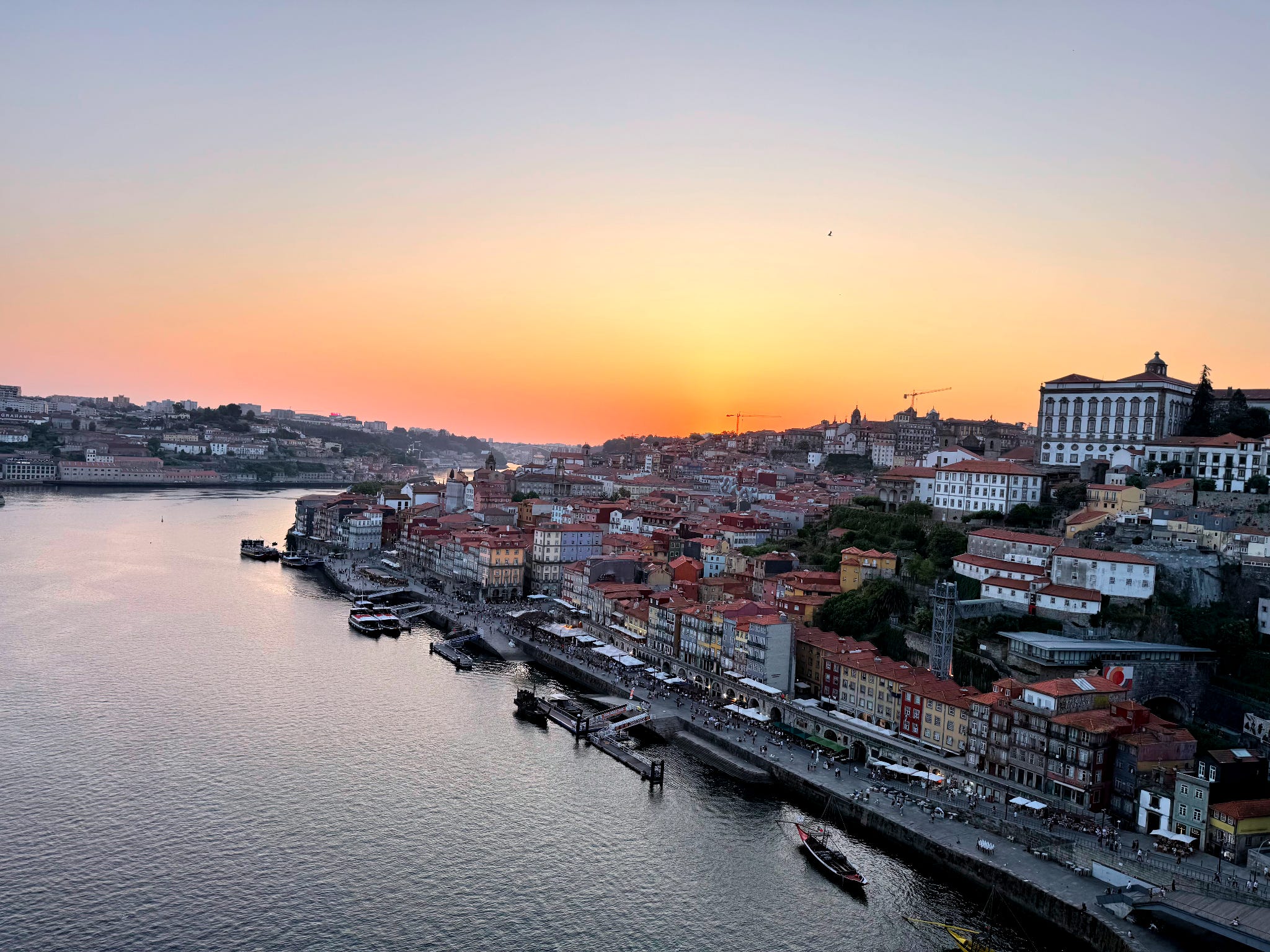
Perhaps at this point in the story, you’re thinking — duh, Tyeesha, the connection is in the fish! — but no such epiphany struck as I traipsed the enchanting streets of Porto and adjacent countryside. (As it turns out, the Vietnamese food scene in Portugal is a whole other essay for a whole other day.). Suffice it to say for our purposes here today, I got lost in the easy mornings, pasteis, and breathtaking landscapes over the Douro River.


The answer was under my nose the whole time, though, literally. Roman garum (fish sauce) factories once ran near Setúbal, which is the same coastline from whence Portuguese colonialists launched their sails centuries later, using a tradition similar to that used on the nước mắm presses on Phú Quốc island. Whether the technique traveled, or simply occurred to two different civilizations independently, historians haven’t settled. What we do know is: salt, fish, time, and the liquid that results, goes on everything.
Portugal’s taste for preserved fish has lived on in bacalhau, the salt-dried cod central to Portuguese identity.
Aha! The fish.
A love note to Porto
One of the last places I (re)visited before leaving Porto was the Mercado do Bolhão, Porto’s iconic market hall, recently restored after years of renovation. Vendors sell it all — fresh fish, produce, cheese, traditional prepared foods, artisan crafts, flowers — across two open-air arcade levels.
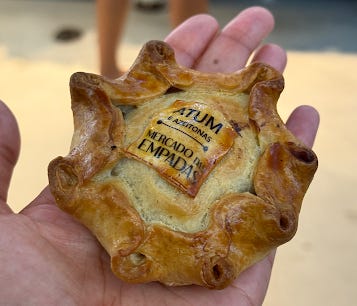
Everything about the market excited me, from the high ceilings to the teeming stalls of cheese, bread, pickles. The bacalhau was stacked in towers.
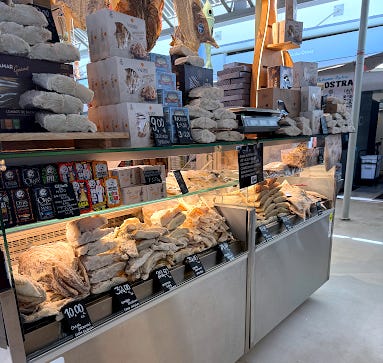
For a place so bustling and alive, the market still somehow felt cozy and welcoming. It’s the kind of place where you get lost, but it still makes you feel like you belong. That memory of my last time in the mercado is how I will remember my month in Porto.
Oh. And the fish sauce 🙂.
SOMETHING ROOTED (NEVER PRECIOUS)
Every issue, we share something passed down—a recipe, a ritual, a way of doing things—sometimes in its original form, sometimes adapted for the lives we’re actually living.
One thing I appreciated most in Porto was that nothing ever felt rushed. Especially lunch. Neighborhood restaurants fill for the lunch hour(s), and wine comes out in carafes. A typical casual midday meal in Porto is multi-course: bread, soup, main, wine, sweet.
One of the signals that lunchtime is to be savored is couvert. It’s a Portuguese custom for meals to start with a little something: usually olives, sometimes bread, cured meat, or cheese.
(No, it’s not free, and no, you’re not getting taken when you see the extra €1.50 on your tab.).
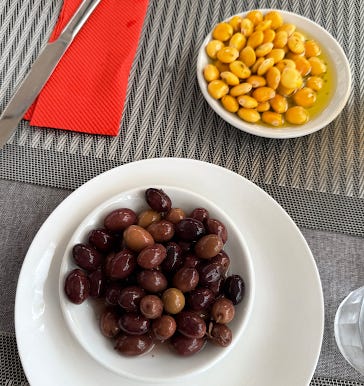
While I don’t start most of my meals with olives, and I’m certainly not taking two-hour lunches most days, I am much more intentional these days about honoring the tradition of enjoying my midday meal. There’s no more wolfing it down in front of a computer, reading the news on my phone, or thinking about how quickly it’ll be over. I try to take the time to be grateful for the food and all the hands that went into its preparation, savor the flavors and smells and sounds, and chew slowly.
It’s a small ritual that’s brought delight to my life, and I hope it can for you too.
RECS N THANGS
Things to eat, read, watch, explore.
READ.
Two for you:
Jodi Ettenberg’s deep dive on fish sauce origins
Rafael Tonon’s Atlas Obscura piece on the archaeologists bringing Roman garum back to life in Portugal.
EXPLORE.
I highly recommend visiting Porto if you want to experience urban living without madness. If you do, rent a car for at least a day. So many cool and interesting places to explore are within a few hours’ drive. (Feel free to hit me up for my full Wanderlog itinerary from the month.).
For example, I spent a day and a half in Marvão, a medieval hilltop village in the Alentejo region of Portugal, 3.5 hours outside of Porto and near the Spanish border.
The Castelo de Marvão was steps outside my hotel. The sunrise view alone is worth the trip.


YOUR STORY
It’s your turn. We run on the philosophy that writing it down imperfectly is better than not writing it down at all. Respond in the comments, reply to this post, or just jot your thoughts down somewhere.
Enjoying a dinner of bacalhau à lagareiro (flaky white fish topped with sautéed onions and peppers) at a B&B tucked next to a 9th-century castle, my mind wandered to my mother’s kitchen. Different continent, different cuisine, but the food carried the same logic: simple flavors, fresh ingredients, made with soul.
Is there a dish your mother or grandmother made that connects to something bigger — a place, a culture, a history you’re only now starting to understand?
Tyeesha Dixon is a lawyer, strategist, and founder—first of the consultancy Dixon Park Group, and now of Never Precious. She’s spent her career at the intersection of equity policy and culture, from daily newspaper reporting to civil rights lawyering at Chicago City Hall and the White House. She roams the globe unearthing cultural treasures and is almost certainly at this moment thinking about her next meal.