


For this inaugural issue of the Never Precious newsletter, I share a personal essay on the soup that raised me, the soup that found me, and the grandfather who reminded me I would never have to choose between the two.
BUT BEFORE I FORGET…
With winter (finally) loosening, I’ve been on the hunt for an easy pick-me-up to remind my body what spring feels like. I hit the jackpot rediscovering hot lemon water, so I’m spreading the news.
It’s a simple elixir—literally just hot water and a slice of lemon, squeezed then dropped. It makes my morning feel like a hug. The trick is to have it first thing (yes, before coffee). After a week, you’ll feel like a new person. Trust me on this one.
NOW ON TO THE GOOD STUFF
Tteokguk (떡국): the deceptively simple Korean beef broth soup that graced my family’s table (and most Korean families’ tables) every New Year’s day. Its signature ingredient is tteok (떡), the oblong, coin-looking, chewy white rice cakes that cook like gnocchi (they’re ready when they float). Guk (국) in case you’re wondering, means soup.
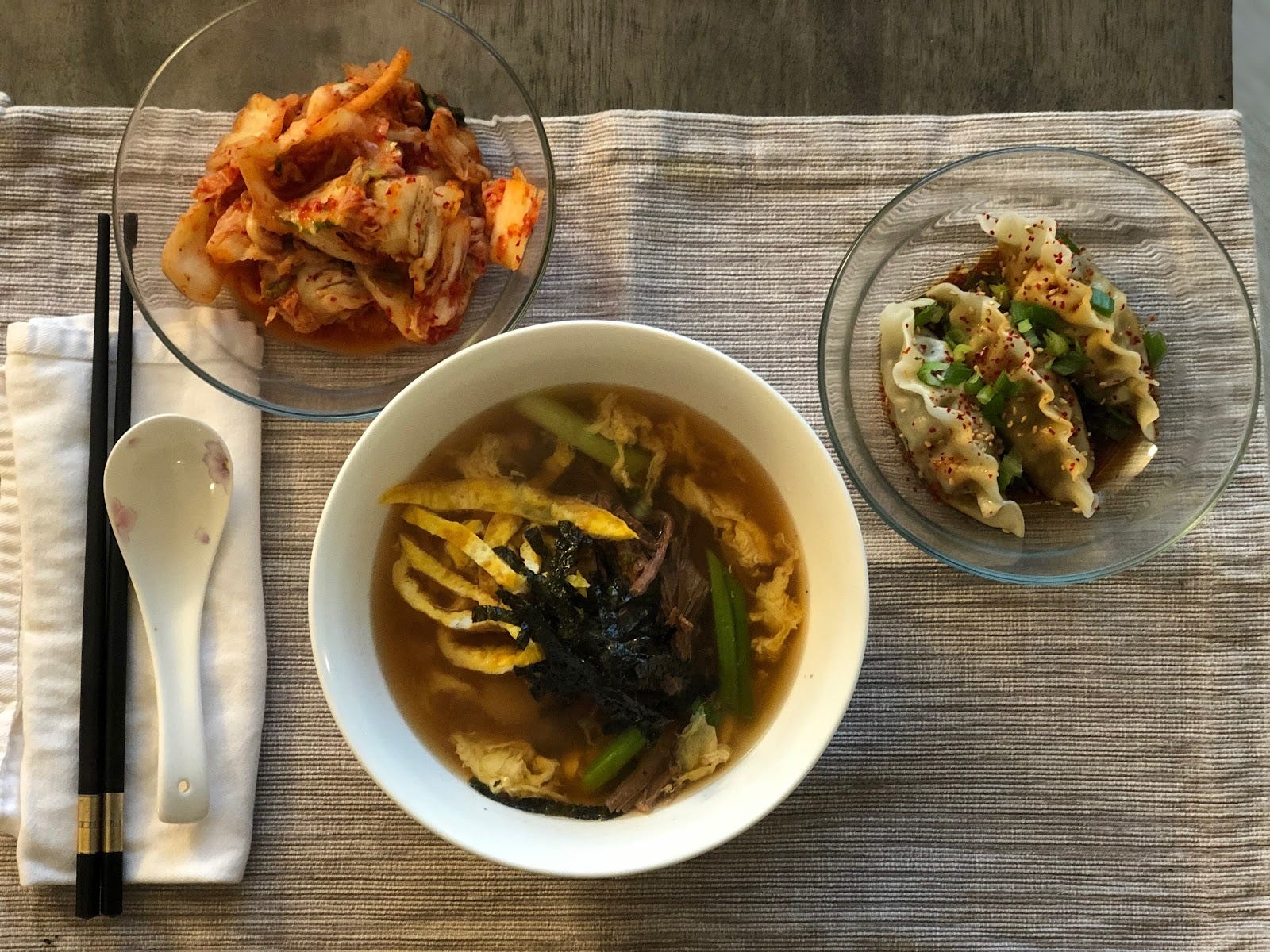
In Korea, eating tteokguk on Lunar New Year is almost a requirement. As the chef and cooking authority Maangchi puts it, the process of turning a year older isn’t “totally complete until you had a bowl.”
Growing up, the gukmul (국물) seemed so plain. Bland, even. The broth was too clean. The ingredients were too simple. With just lean meat (usually a fatless brisket), garlic, onion, and black pepper as the soup base, surely this could not be the thing that would guarantee happiness and prosperity for an entire people for a whole 365?? Sure, we’ll garnish it with scallions, egg omelette, and ghim (김), or dried nori. And yeah, we’ll devour it with a side of homemade cabbage kimchi. But is this really the thing all Koreans eat to start every new year?
(Never said any of this aloud. Duh.).
To learn more about the history of tteokguk, and why it’s such an important part of Korean culture, check out this take from BBC correspondent Erin Craig, who visited the Institute of Traditional Korean Food in Seoul to learn all about it.
But as things tend to happen when we age, I came to appreciate cleanliness and simplicity, particularly as my taxed, stress-laden body started rejecting complexity, flavor, and, most notably, rich animal fats. As I moved around the country post-undergrad, nose-in-book chasing my all-encompassing career pursuits, tteokguk became a part of my personal New Year’s day tradition.
At first, I would find it at restaurants. When the quality of the Korean food around me stopped matching what I was used to in the DMV, I learned to prepare the soup myself at home.
To start, it was just on New Year’s. Eventually, I made it throughout the year for comfort.
It was the first Korean dish I learned to make, and, for many years, it was the only Korean dish I knew how to make. For a long time, it was the only dish that always made me feel better.
That is, until I met pho.
Oh, pho. I doubt I need to describe pho for most of you because its popularity has skyrocketed in the U.S.
Just in case, though, pho is a simple, gorgeous, Vietnamese soup comprising long-simmered bone broth (cooked anywhere from 6 to 18 hours) steeped in star anise, charred ginger, and clove. The broth is poured scalding over vermicelli-style rice noodles topped with thin-sliced rare beef or other proteins. The garnishes arrive on a separate plate—usually a heap of fresh bean sprouts, Thai basil, thin-sliced chili, and wedges of lime. Depending on where you are in the world, other goodies might await, like hoisin (plum sauce, thick and sweet), sriracha, thin-sliced pickled garlic, or chili oil.
I tried pho for the first time in 2007. I wasn’t terribly impressed; Koreans famously aren’t huge fans of cilantro. Turns out, my first pho just wasn’t that great. I forgot about it for a while.
But at some point, I was reintroduced. To the real kind. The good kind.
My world shook.
Like tteokguk, pho is:
Hot
Clear
Beef-based
Gluten free
Topped with fresh garnish.
The only thing it’s missing was the kimchi (김치) ❌. I quickly learned you can eat pho with a side of sliced white onions soaked in white vinegar (hành dầm). Bam!
My mouth is watering right now writing about it 🤤.
Despite the similarities to my beloved tteokguk, pho was different—dare I say better—because it was complex. That broth had layers.
It was also affordable, quick, and everywhere.
It eventually replaced tteokguk as my go-to comfort soup. Life got too busy to boil stockpots of soup at home.
And then…the guilt.
As my obsession with pho grew greater, though, I started to feel like a traitor. My youngest brother and I spent a lot of time together when I was in law school (he was going to the undergrad of the same school), and pho was the thing we always wanted to eat together. It felt wrong to find such deep comfort, and to nurture our sibling bond, over a food we did not grow up eating with our family, a food not cooked by the hands of our mother and grandparents and aunts.


These thoughts of betrayal culminated into straight up guilt when my cousins and I took my grandfather to eat pho for a family meal a year or so before he died.
As the bowls of fragrant goodness were delivered to our tables within just a few minutes of ordering, I saw the looks of glee and anticipation on my cousins’ faces as they bent their noses down to smell the broth, steam washing over their delighted faces. We were all a bit hungover, and I don’t care what anyone says, pho is the perfect food the morning after a night of drinking. We all gingerly reached for the heap of toppings; my aunt admonished us sharply, “You don’t know how to eat pho.”
(She was right. Turns out it’s much better if you use all the toppings, generously.).
I remember wondering whether we had made a selfish choice taking my grandfather to pho for one of our growingly rare multi-gen family meals. Like in many cultures, food is a core connective tissue in Korean culture. Eating together as a family meant honoring our culture. I remember thinking, how could we do this to him? He probably hates cilantro. We should’ve gone to a Korean restaurant.
When I looked over at halabeoji (할아버지) he seemed content, stoic, as he slurped up his noodles. So I went about slurping mine up, too. That guilt simmered for years, though, especially as I grieved my grandfather’s COVID-era death.
But he just wanted us to eat. Together.
Now, in my chapter of perimenopausal wiseness, and as I reflect on my grandfather’s extraordinary life, I know that was ridiculous. He valued togetherness above all. He taught us to show gratitude for the near-instant access we had to nourishing and abundant food sources—a luxury he did not have in his own childhood. Growing up, my cousins and I were periodically reminded to be grateful for what we had: Halabeoji had to eat tree bark as a kid! He had to walk to school in the snow without shoes!
My grandfather beamed whenever we ate well, and, most importantly, when we ate together. That is what I should have taken from that moment when three generations of our family were gathered together eating (some very delicious) pho—not fretting about cilantro.
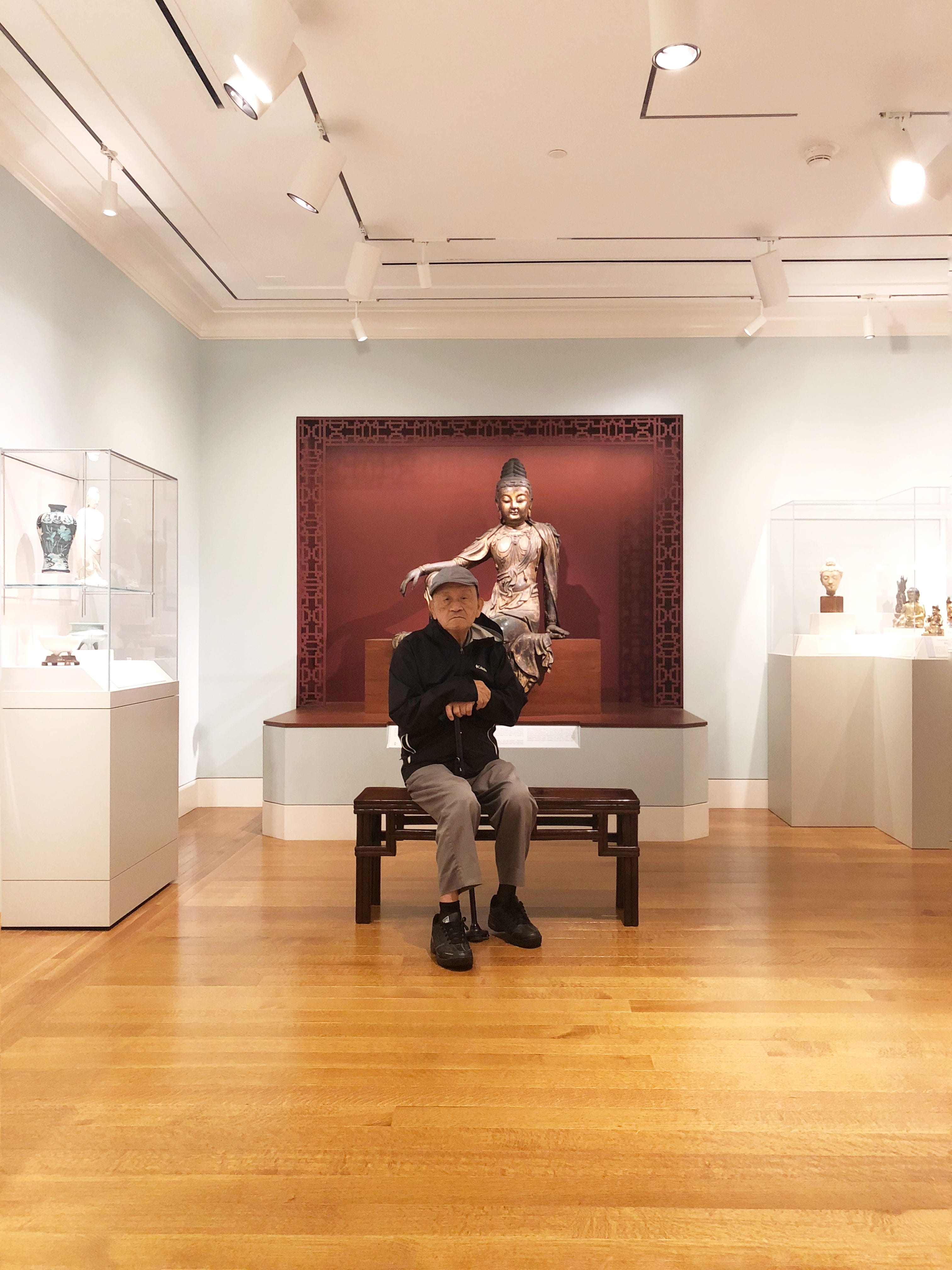
Today, both tteokguk and pho hold a special place in my heart, and on my table. Thanks to my grandfather’s healthy appetite, openness to trying new things, and boundless love for us, I enjoy both, guilt free.
Turns out no one was ever going to make me choose.
As the universe would have it, one of my cousins ended up marrying someone whose mother is from Vietnam. Though my grandfather was already gone when they married, the rest of our family of course welcomed our new relatives, and their culinary traditions, with open arms, just like halabeoji taught us. I’m excited to one day learn how to make pho from my new family members. And most importantly, to do so while carrying forward the gratitude and togetherness my grandfather spent his life teaching us to live by.
Pho with tteok would probably be delicious, huh? 🤔.
SOMETHING ROOTED (NEVER PRECIOUS)
Every issue, we share something passed down—a recipe, a ritual, a way of doing things—sometimes in its original form, sometimes adapted for the lives we’re actually living.
My cousin, Jen, became pescatarian at age 7 or so after a visit to a chicken plant. She makes her tteokguk using a light, easy anchovy broth.
I gave it a shot, and you should too. Kimchimari’s tteokguk recipe is a great place to start.
RECS N THANGS
Things to eat, read, watch, explore.
READ.
To learn more about Korean food culture and technique, check out the narrative cookbook My Korea: Traditional Flavors, Modern Recipes, by Chef Hooni Kim. If nothing else, read the intro, where he reflects on visiting his relatives in South Korea as a small child.
EXPLORE.
If you’re in NYC and feeling froggy, try to get a res at Meju, Chef Kim’s Michelin-starred restaurant tucked behind his Little Banchan Shop (worth a visit on its own) in Long Island City. Chef Kim seats only eight diners a night, and every course features Korean fermentation (a topic we’ll explore more in a future issue because, well, I’m obsessed). Worth the effort and every penny.
YOUR STORY
It’s your turn. We run on the philosophy that writing it down imperfectly is better than not writing it down at all. Respond in the comments, reply to this post, or just jot your thoughts down somewhere.
The guilt I carried for years was never really about pho. It was about identity and the fear that integrating new perspectives and experiences meant I was leaving something behind. I suspect I’m not alone in that.
Is there something you’ve ever felt like a traitor for loving, food or otherwise?
Tyeesha Dixon is a lawyer, strategist, and founder—first of the consultancy Dixon Park Group, and now of Never Precious. She’s spent her career at the intersection of equity policy and culture, from daily newspaper reporting to civil rights lawyering at Chicago City Hall and the White House. She roams the globe unearthing cultural treasures and is almost certainly at this moment thinking about her next meal.

Breathtakingly beautiful memories, like gentle flashbacks, bringing back the warmth of togetherness through the years.🫶🌸🌸🌸💕
This was incredible to read! Excited to see more posts like this. right up my alley. Exactly the type of stories and traditions we risk losing, especially with immigrant roots. Keep putting these together and I'll read them all and share with friends/family. Looking forward to what's to come!