



If you’re joining for the first time, welcome to Never Precious. I’m Tyeesha Dixon — lawyer, writer, food obsessed — here chronicling food traditions, cultures, and recipes worth preserving before they’re gone. Subscribe below to receive future stories by email every other week.
Hello, family, and welcome to Issue 4.
Today’s feature grew out of conversations with Erin Tiamson about family, food, and her recent trip to the Philippines after her father’s passing. Melissa Bredbenner — lawyer by day, talented writer by (mid)night — took a set of chaotic interview recordings and field notes and developed them into a captivating essay exploring how Filipino cooking traditions have adapted when key ingredients become difficult to access. Enjoy reading this one as much as I did.
For those in the U.S. reading this on Memorial Day, I hope there’s good food, a little rest, and space to remember, reconnect, and spend time with people you love.

BUT BEFORE I FORGET…
The East Coast pollen this year has been unforgiving, and pounding Zyrtec doesn’t seem to be working. I’m giving in and trying a natural remedy my mother swears by — local bee pollen she buys from a nearby bodega. The theory is that it exposes your body to small amounts of the same pollens that trigger your allergy symptoms, allowing your immune system to build tolerance over time (like allergy shots). Fingers crossed.
It’s not my favorite thing to eat, so if you’ve tried bee pollen and know how to make it taste better, please share. If you have other remedies for seasonal allergies, share those too. The allergy sufferers of the DMV appreciate you.
NOW, ON TO THE GOOD STUFF.
The Politics of Ingredients
How restrictions on Filipino ingredients reflect the challenges of preserving culture abroad — and the resilience of the communities that sustain it.
By Melissa Bredbenner
When Erin Tiamson spoke about her recent trip to the Philippines, she kept returning to food.
Kare-kare simmered by her Tita Agnes. Garlic fried rice eaten by hand around the table. Sinigang with its sharp, sour broth. But even as she described the meals she shared there, the conversation circled back to the United States, where some of the ingredients central to those dishes have become increasingly difficult to find.
Erin traveled to the Philippines with her family earlier this year after her father’s passing. The trip brought them back to Pampanga — her parents’ home province northwest of Manila — to reconnect with relatives and settle family affairs. There, celebratory meals stretched across tables lined with banana leaves, and eating with one’s hands was an expression of comfort and familiarity.
Pampanga looked different than Erin remembered.
When she was young, the province still felt largely rural, marked by rice fields and sugar plantations. In the decades since, however, Pampanga has urbanized rapidly with its economy expanding alongside a growing influx of residents and tourists. Despite that transformation, the province remains deeply tied to Filipino cultural tradition and is still regarded as one of the country’s culinary hubs.


Communal Tables
Erin described the food she ate during her trip as rich and full of stews, sauces, pork, and community. Erin joined a boodle fight, a term describing a Filipino meal where food is spread directly across banana leaves covering a communal table. Fried fish, pork, chicken, rice, and skewered meats pile next to one another, and everyone eats with their hands. The tradition traces to its military roots, where meals were designed to encourage camaraderie and equality among soldiers.
After several days of eating out, her family asked Tita Agnes — whom her sister boldly declared a better cook than their mother — to make a home-cooked meal. Tita prepared sinigang and kare-kare with tender oxtail in peanut stew, along with fried fish and garlic fried rice. Beyond enjoying the meal together, her family also spent the time recounting family history and creating fresh memories.
Lost in Customs
But as Erin compared the dishes she ate in Pampanga to the versions she grew up with in the United States, she began focusing less on similarity than difference.
She said the dishes in the Philippines just tasted . . . better.
Part of the difference, she explained, may stem from historic government regulation of food ingredients.
In the 1980s, bagoong — fermented shrimp or anchovy paste central to many Filipino dishes — faced heightened FDA scrutiny tied to manufacturing and import standards. Other Filipino food products over the years, such as certain meats, have similarly run into strict import requirements in the United States. Such restrictions can diminish availability.
Filipino foods are not unique to these regulatory barriers. Mexican, Chinese, and other diasporic cuisines have similarly been shaped by import restrictions and U.S. government standards. And while food regulations are often framed as neutral matters of safety and compliance, for immigrant communities, those policies can carry consequences that shape what traditions remain accessible across generations.
Most recently, the FDA issued import restrictions on potassium iodate, an additive commonly used in iodized salt throughout the Philippines to ensure its stability in hot, humid climates. Since iodized salt is used in many Filipino food products, the effects rippled.
Banana ketchup — the sweet, savory condiment ubiquitous in Filipino cooking — became one of the most visible examples, resulting in empty shelves in Filipino grocery stores, rising prices, and frustration across social media.
As Erin described it, ingredients like banana ketchup and bagoong are “the bases of most of our foods.” When shortages and restrictions disrupted access to those products, she remembered wondering: how are we going to cook Filipino food? For many immigrants and second-generation Filipino Americans, these products are cultural links rather than specialty items.
The Ketchup Survives.
But communities adapted. Long before import restrictions complicated access in the United States, Filipino cuisine had already been shaped by such adaptation. Banana ketchup itself reflects that history. The condiment became widespread during World War II, when tomato shortages pushed Filipino communities to create alternatives using bananas, sugar, and vinegar.
And what was done before can be done again. Filipino communities in the United States came up with their own solutions. Companies like Manila Mart in the DMV, and Fila Manila, founded in New Jersey, created their own versions and saw surges in demand as a result.
The replacements, Erin admitted, “don’t taste exactly the same.” Still, they are “close enough” to keep traditions alive.
And in the end, isn’t that what matters most?
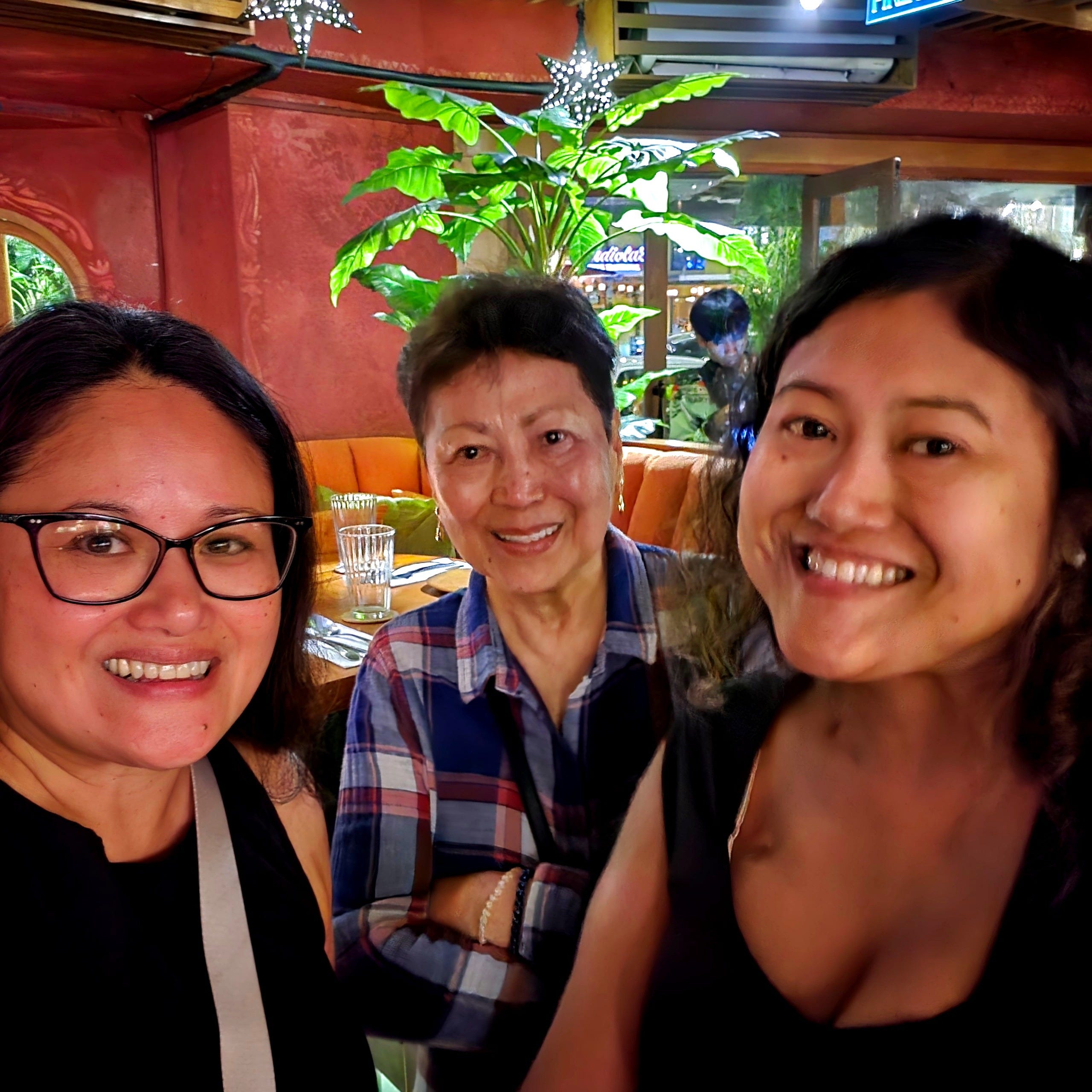
Read Erin’s personal reflection of her mother’s Christmas hopia tradition in Issue 3.

Does your family have a recipe, food tradition, memory, or kitchen ritual you want to preserve? Tell us about it here.
SOMETHING ROOTED (NEVER PRECIOUS)
Sharing something passed down — a recipe, a ritual, a way of doing things — sometimes in its original form, sometimes adapted for the lives we’re actually living.
One thing that came up in Erin’s interview was the Filipino practice of eating with fork and spoon instead of fork and knife — a tradition I didn’t encounter until visiting Thailand last year, and one I recently got to experience firsthand when Erin’s mom invited me to her home to learn how to make sinigang. (More on that meal soon.)
The concept is simple: the spoon does most of the work. The dominant hand holds the spoon, while the fork helps guide and steady food when cutting is needed. The edge of the spoon works well in place of a knife. It’s an elegant and practical tradition that keeps the focus on the meal rather than the mechanics of eating it.
No more trying to figure out how to eat rice and stew with a fork, folks!
RECS N THANGS
Things to eat, read, watch, explore.
EAT. EXPLORE.
Despite living in Maryland for more than half my life and getting my driver’s license a half-mile away, I’d never heard of Manila Mart until Erin mentioned it in her interview.
I visited for lunch with a friend on a rainy afternoon last week. The cafe was alive, with families crowded around tables, trays of food moving quickly from kitchen to counter. Something about the mix of steam, garlic, rain, and conversation brought me back to eating plate lunch on the side of the road when I visited Hawaii.
Beyond the cafe was the market itself, stocked with the building blocks of Filipino home cooking: frozen fish, fresh produce, shelves of sauces and seasonings, and more varieties of Spam than I knew existed (teriyaki Spam, y’all!).
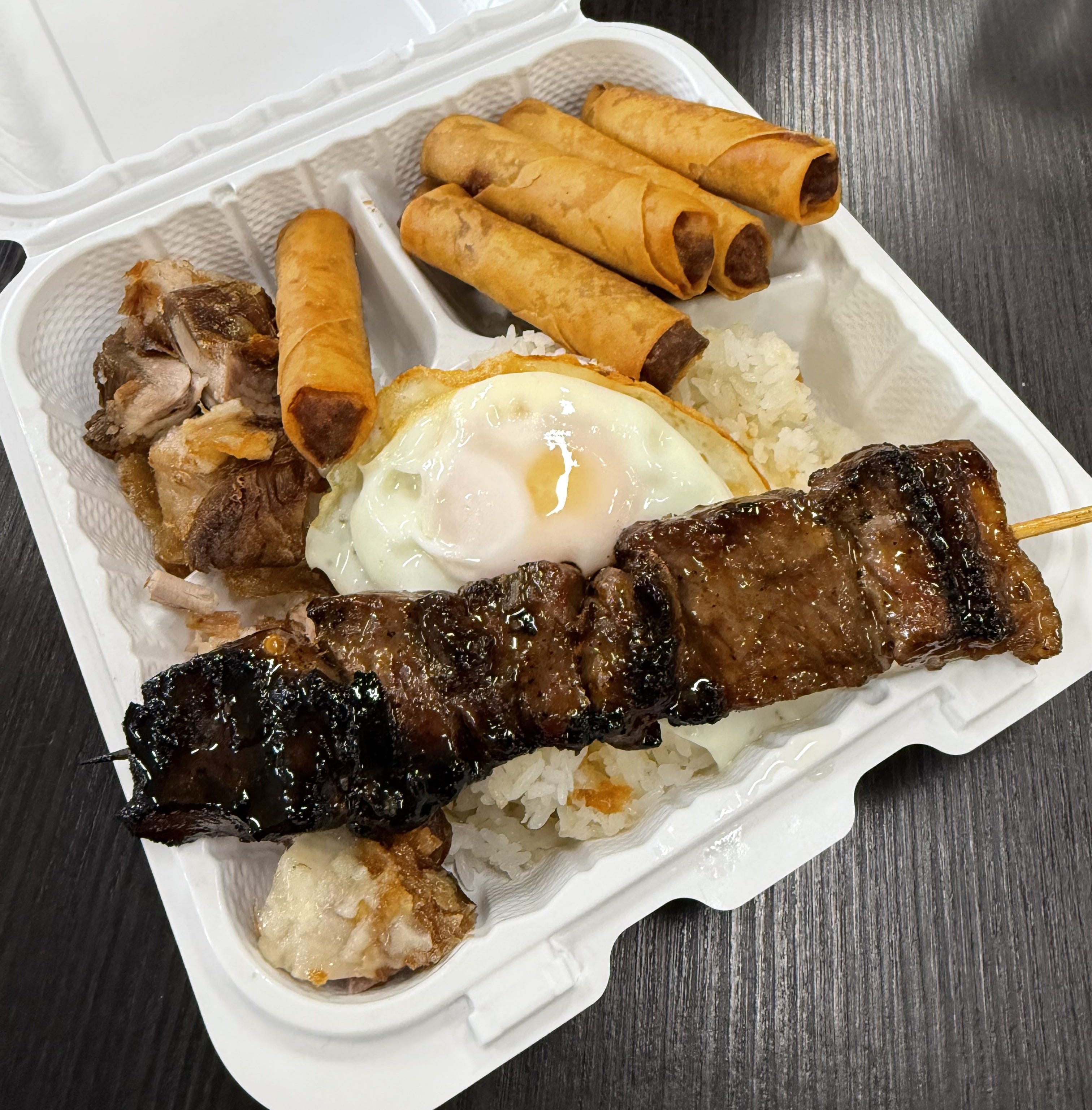
The visit was a reminder that new worlds doesn’t always require traveling to find. Sometimes they’re down the road from where you grew up.
READ.
Sharing a couple pieces I came across while researching for this issue and really enjoyed:
An essay from For the Love of Adobo unpacking that Filipino food is often misunderstood through overly simplistic ideas about “spice,” when in reality its flavors are shaped by regional traditions, condiments, colonial history, and deeply personal approaches to taste.
A piece from meryenda exploring how fermentation connects Filipino food traditions to memory, migration, sustainability, and community.
YOUR STORY
It’s your turn. Family stories rarely survive because someone captured them perfectly. They survive because someone took the time to get them down.
A lot of family recipes survive migration through substitution. Sometimes the version we inherit has already changed, shaped as much by availability and survival as by memory.
What’s an ingredient your family has swapped, substituted, or improvised to keep a recipe alive?
Tyeesha Dixon has spent her career at the intersection of equity policy and culture, from daily newspaper reporting to civil rights lawyering at Chicago City Hall and the White House. She writes about food, memory, migration, and cultural tradition, and is almost certainly at this moment thinking about her next meal.
Thank you for sharing while I’m overwhelmed with bad news to junk mail and spam callers, it’s something I look forward to for the next edition. Keep up the good work!