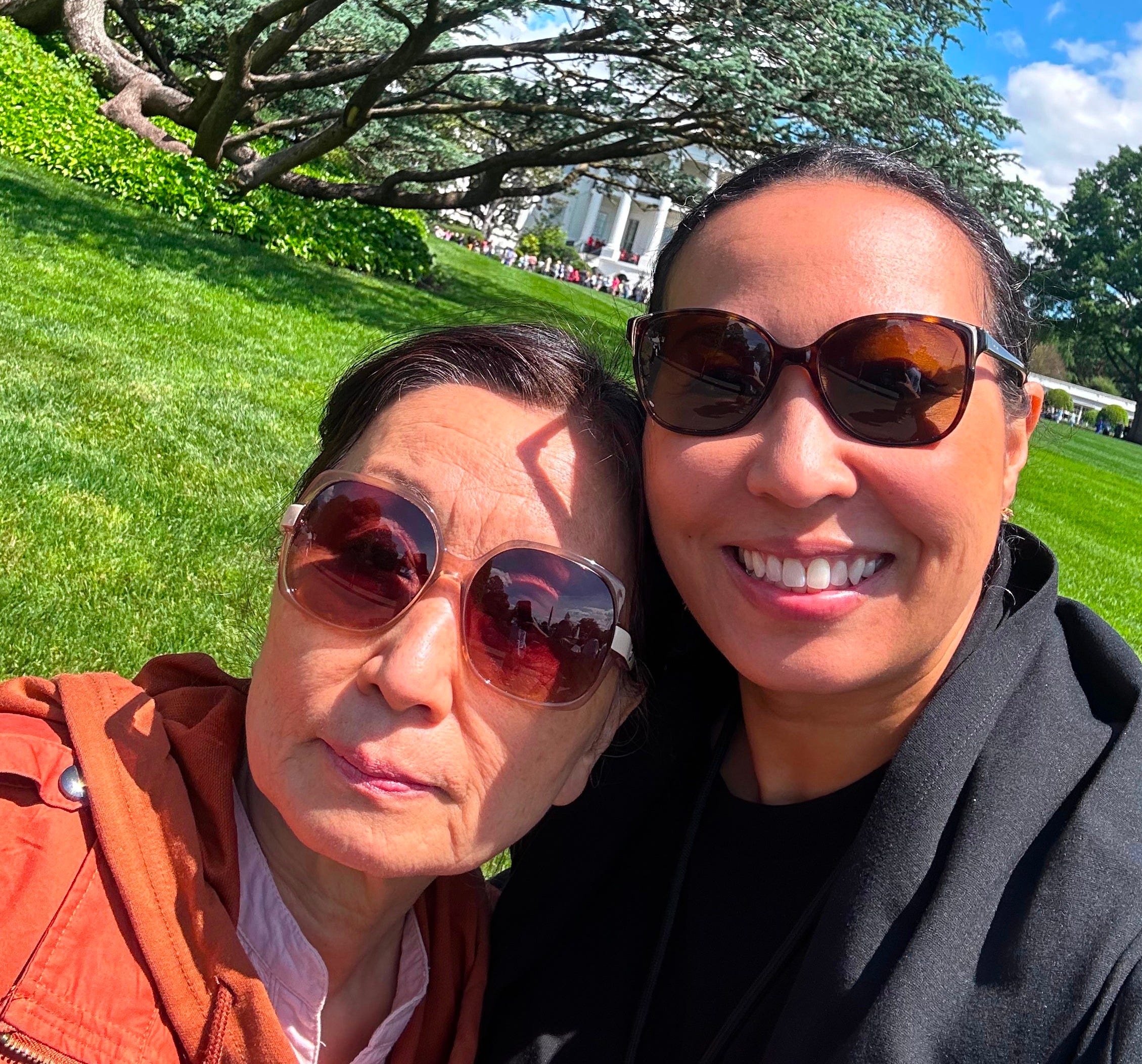
For those joining for the first time, welcome to Never Precious. I’m Tyeesha Dixon — lawyer, writer, food obsessed — here chronicling food traditions, cultures, and recipes worth preserving before they’re gone. Subscribe below to receive future stories by email every other week.
Hello, Never Precious family, and welcome to this Mother’s Day edition.
Today, we’re celebrating moms, the people who take care of us like they’re moms, and everything they do to make sure we eat right. Mostly without a measuring cup in sight.
For Issue 3, I asked Never Precious readers to send food stories and recipes, in whatever format they wanted, to honor their moms and the mom-like figures in their lives.
What came back was funny, moving, chaotic, tender, and deeply familiar. Some contributors sent fully formed stories. Others sent text messages or voice notes recorded between errands.
Rather than smooth out those variations, I wanted to honor them. Each vignette showcases the raw material you submitted, with my notes, research, and light editing sprinkled in.
Never Precious is a space where memories can live together — thoughtfully, beautifully, and in conversation with one another — no matter how they arrive. Amid the mashup of voices, perspectives, and formats, you’ll see a little of yourself and your family in each of these moments.
Thank you to everyone who has trusted me with their stories. Enjoy 🌸.
IN THIS ISSUE
Vignettes featuring stories, recipes, voice notes, photographs, and family memories shared by Never Precious readers to honor moms and caregivers.
Mbuzi Mkorogo, with Melanie Mpanju. A reflection on Tanzanian goat stew, migration, inheritance, and what it means as a daughter.
Hopia, with Erin Tiamson. Memories of making flaky Filipino mung bean pastries with mom at Christmastime.
Ellen’s “Chicken Parm”, with Adam Flynn. A warm and hilarious tribute celebrating a BFF’s failed attempt at the classic Italian-American dish.
Sofrito, with Natalia Delgado. Lucy’s Puerto Rican sofrito recipe and a glimpse of the book that carries it forward.
Grandma Guzzie’s Kitchen, with Erin Kuller. A legacy survived through latkes, soup, and the grandmother you meet over and over again through both.
Puff Puff, with Tareah Ikharo. A beloved West African fried dough recipe shared while documenting family recipes with her mother.
Rajma, with Gunjan Sud. A North Indian kidney bean comfort food adapted with care, instinct, and soy protein.
Flan de Leche, with Camilla Krauss. A caramel custard recipe tying motherhood, memory, and condensed milk.
Jollof Rice, with Yema Gbondo. A Sierra Leonean family recipe preserved through voice notes across an ocean.
Mandu, with Esther Asadi. Korean dumplings, Lunar New Year, and three generations cooking together.

MBUZI MKOROGO
Sautéed goat slow-cooked with secret spices passed down from Kilimanjaro
An essay by Melanie Mpanju
Mbuzi mkorogo — otherwise known as sautéed goat — is more than just a dish in my family. It is a beloved Tanzanian meal that my mother often cooks not from recipes, but simply from instinct passed down from her own late mother. Somehow, every time, it turns out exactly as I remember it: deeply marinated, tender from slow cooking, and filled with an aroma of spices that linger in our family home before and after the meal is done.
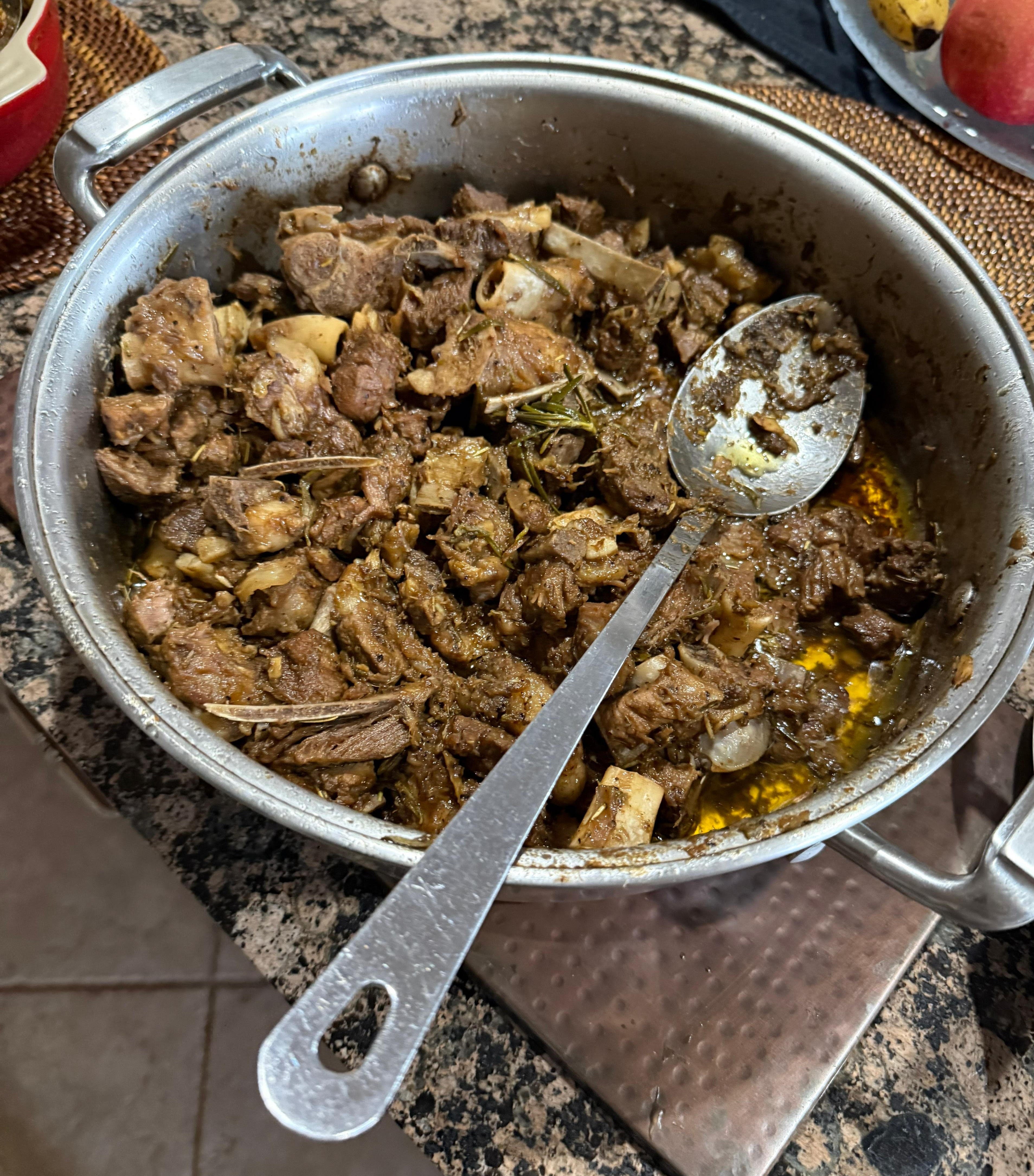
My mother always begins the same way. The foundation of the dish includes onions, garlic, ginger, spices (that shall remain a secret), and fresh herbs. The goat meat, bought from a local Indian food mart and marinated overnight, is added to a large pot, where it is sautéed, seared, and stirred carefully.
Nothing is rushed, and everything is intentional. Each step builds on the last. The result is a richly spiced goat meat in a savory broth sauce that feels so comforting. My mother often serves it with pilau, kachumbari, and other side dishes. It’s no wonder this is the most requested dish whenever my aunts, uncles, and cousins visit. It has won first place in several potluck competitions.
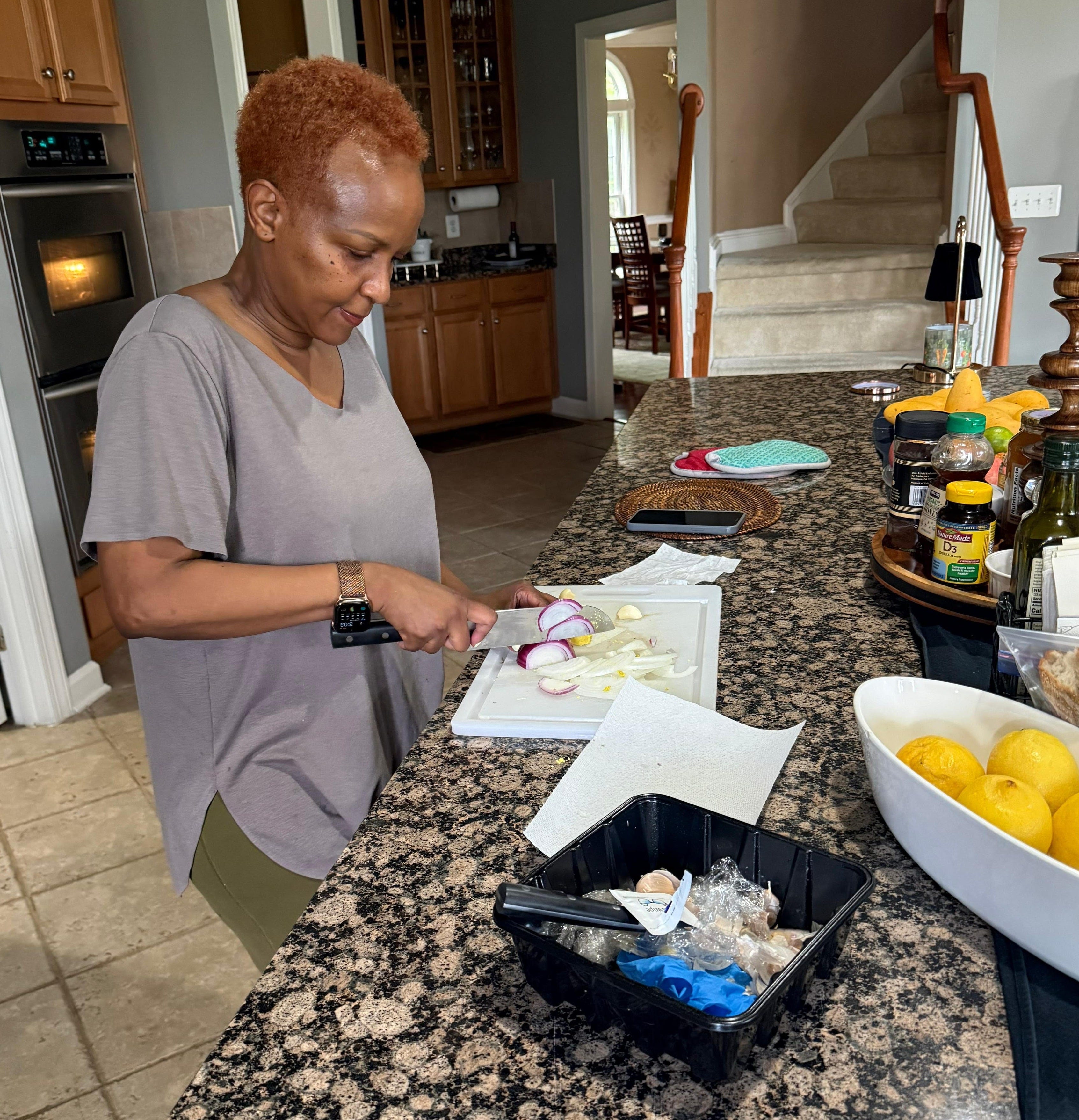
This Mother’s Day, I find myself reflecting on what this dish has meant to me over the years. It reminds me of my late grandfather’s farm in Kilimanjaro, Tanzania, and the goats we would buy every Christmas in preparation for our family feasts. Now, it welcomes me home in a different way. After a long drive from my apartment in Washington, D.C. to Loudoun County, Virginia, the aroma of my mother’s goat meat excites me. I am left wondering which family members might already be inside the house, or who is coming later that day.
Growing up in Virginia, in a place where I often felt uneasy about sharing my culture, mbuzi mkorogo also became a bridge. It brought my multicultural group of friends — from Vietnam, El Salvador, Ethiopia, and the U.S. — into my home and allowed them to understand my identity before I even had the words to articulate it.
This dish has carried memory, identity, and connection for me throughout my upbringing. And I owe this entirely to my mother. She has always expressed her love through words, but most importantly through the way she cooks and gathers people. Mbuzi mkorogo is more than just a dish on the table: it is the expression of love and community passed down from my late grandmother to my mom, and now to me.
HOPIA
Filipino mung bean pastries, made from scratch and hand-delivered to family
When I asked readers to share food memories of their mothers and caretakers, Erin Tiamson texted me about making hopia, the flaky Filipino stuffed pastry, with her mother at Christmastime.
“I remember my mom spending the night before stirring and mixing the yellow mongo beans in a large pot on the stove,” Erin wrote. “The longer it cooked, the beans would pop like hot lava.”
The next day, Erin’s family made the dough together using flour, oil, and water. They rolled it out, chilled it, and beat it flat with a fist before filling each piece with the cooled beans and placing them on a sheet to bake.
“I remember tasting the flaky pastry and the yellow beans warm from the oven and then allowing them to cool on wire racks,” she said. “We would pack them into small containers and make deliveries to nearby family.”

ELLEN'S “CHICKEN PARM”
On nearly poisoning twelve people, and why that's exactly what makes her a great mother
An essay by Adam Flynn
If you ask anyone who knows her, they’ll tell you the same thing: she cannot cook. Truly and impressively.
Yet she tries. Not because she enjoys it, or even has a desire to learn, but because she loves her family and is willing to step out of her comfort zone to show it.
The best example is the infamous chicken parm dinner. Twelve of us gathered, full of optimism and with empty stomachs, and she gave it everything she had. What came out of the kitchen looked somewhat promising, but it was not ready for human consumption. We all caught the undercooked chicken just in time to prevent a family-wide case of salmonella poisoning. It is a story we all still talk and laugh about years later.
At the center of this story is my ex-wife and mother of my son, Ellen.
We’ve all heard that some people are “roots,” some are “stems,” and some are “leaves.” But if I had to describe Ellen — she’s evergreen. She is steady and enduring and brings life, color, and support no matter the season of life. She is truly my best friend.

These memories matter because they capture something essential about who she is. Cooking doesn’t come naturally to her. I watched her make a meatloaf once, and I was traumatized.
But she still tries because it is one more way for her to show care for the ones she loves. That willingness to step into discomfort, to risk failure, to laugh at herself, all in the name of love and care is what makes her such a wonderful mother and person. The food may not always (or ever) turn out right, but the intention behind it and the laughs along the way never miss.

SOFRITO
The aromatic, Puerto Rican base of garlic, peppers, and herbs that starts almost every dish
Natalia Delgado began documenting her mother Lucy’s recipes some 20 years ago and has been cooking them herself since. The intro to the book Natalia created says it all.
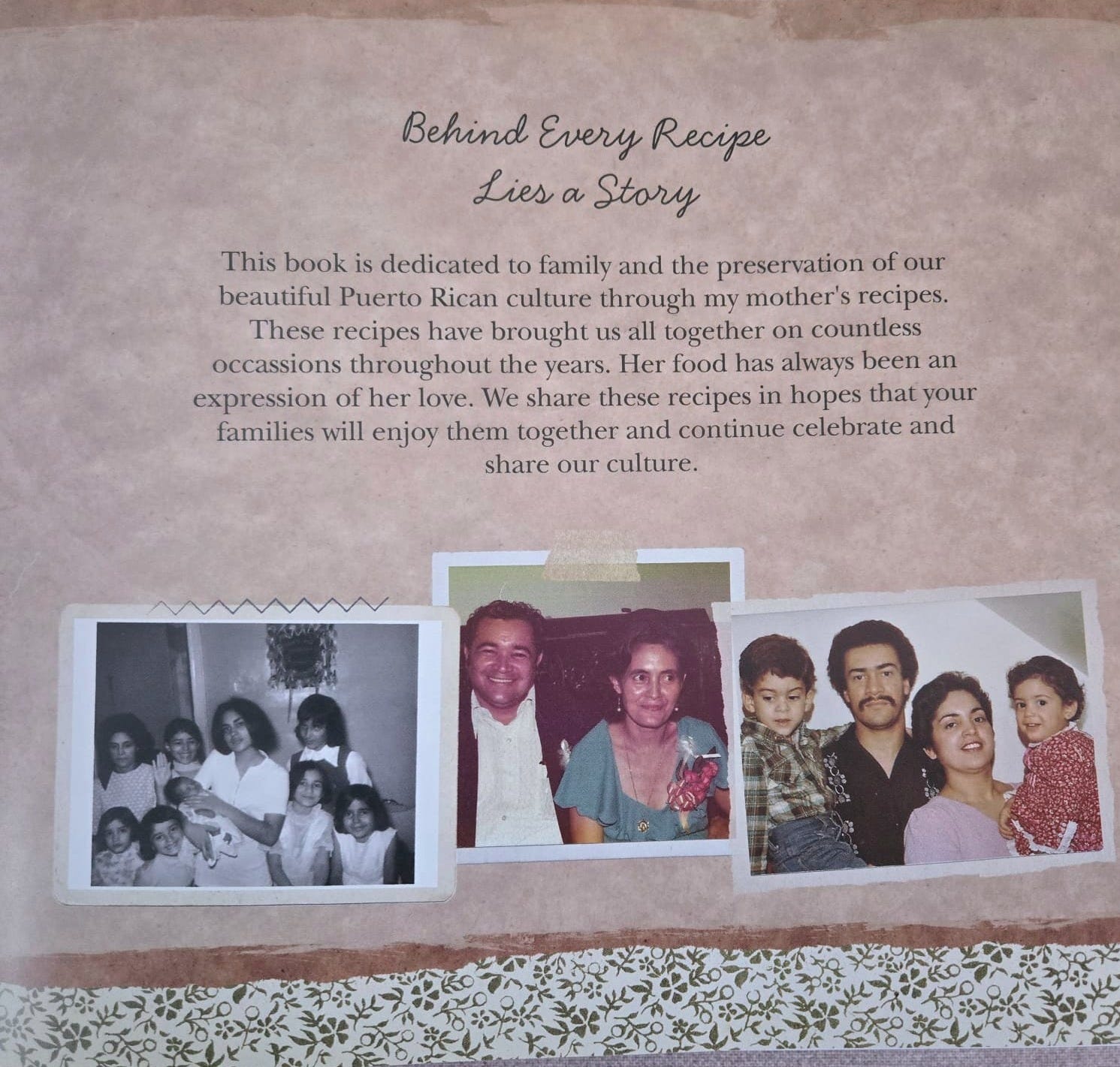
For today’s issue, Natalia contributed one of her mother’s classics: sofrito, described by Lucy as “the base for almost all my recipes.” I’ve had Lucy’s cooking, and her pernil, with its perfectly crispy cuero, takes you right to the island. It feels particularly special to share the recipe that forms the foundation of her cooking here.
Lucy’s Sofrito
Ingredients
3 red bell peppers, diced and seeds removed
2 green bell peppers, diced and seeds removed
2 heads of garlic, peeled
1 bunch cilantro
1 bunch recao (also called culantro)
2 handfuls ajices dulce, seeds removed (optional)
1 medium onion, diced
Black pepper to taste
1 tsp salt
Instructions
In a food processor or blender, mix cilantro and recao with peppers for better blending. Place all ingredients in food processor. Add onion last. Consistency is important. Do not liquefy. The mixture should be smooth and sort of creamy.
Pour mixture in large bowl. Stir the mixture then add black pepper, and salt. Stir again. Separate into freezer bowls/jars.
Natalia also offered one important warning about aji dulce, a sweet pepper:


GRANDMA GUZZIE'S KITCHEN
Latkes, soup, and the person you meet over and over again through the people she fed
An essay by Erin Kuller
My husband’s Grandma Guzzie passed away in 2012, years before Charlie and I married. I only met her a handful of times before her death, but because of her legacy around food and family, I feel like I knew her.
There’s the story about latkes, when cousin Judd arrived a little late to Hanukkah and the latkes were all gone. So I’m told, she made them fresh with a shoestring-style crispiness. Get to the party early — there was no chance anybody was saving you any.
There’s the story about the vats of vegetable soup she’d make for Charlie to keep in the freezer to eat after ski races in high school. Decades later, he still talks about it on cold days. We have yet to replicate it.
There are the seemingly endless stories from cousin Jamie, the younger generation’s cook of the family. She remembers Guzzie’s bright blue floor like it was yesterday. She remembers what it felt like to be in the kitchen with her, snacking on fresh berries and tweaking each recipe with every trial. Each time, delicious.
Most of all, Jamie talks about her connection with her grandma through food that keeps them hitched across generations and time.
I’m not Jewish, but even so, her traditions feel like mine because through family connection, they are.
She might be gone, but through her grandchildren’s food and stories, I’ve met Guzzie over and over again.
What a mitzvah.

PUFF PUFF
The West African fried dough snack that disappears almost as quickly as it’s made
Tareah Ikharo has been working with her mother to test and document her mother’s Nigerian recipes. (More on that project in a future issue of Never Precious.). For this issue, Tareah shared one of her favorites: puff puff, the beloved West African fried dough snack found at parties, street stalls, and celebrations across the diaspora. Tareah’s mom writes:
“It’s easy to make, budget friendly and highly addictive . . . Puff puff are similar to the Louisiana beignet but unique in taste, texture and preparation. I’ve made puff puff for American colleagues and they always ask, ‘are these beignets or fried balls?’ My response has always been that puff puff are in a class of their own.”
“Puff puff are uncomplicated treats,” she continues. “In their simplest form, you need only kitchen staples: flour, sugar, baking powder or yeast, salt, water and frying oil.”
However you choose to make them, there’s an easy barometer for knowing whether you made them right.
“If made correctly, you’ll find yourself reaching for one after another until they are all gone.”
Mama Ikharo’s Puff-Puff
Ingredients
2 cups self-rising flour
2 tbsp baking powder (or yeast)
1/2 cup sugar (reduce sugar if you prefer mildly sweetened)
1/2 teaspoon salt
1-1/2 cups lukewarm, NOT hot Water (depending on preferred density of dough)
1/2 tsp nutmeg or vanilla extract (optional)
Oil for deep frying (canola oil is preferred)
Instructions
Combine flour, sugar, baking powder/yeast in a large bowl.
Add water, mix well together until all lumps are dissolved. The dough should be loose but not watery; the water quantity depends on preferred density of the dough.
Cover the mixture with a kitchen towel or plastic wrap, and set aside for (1) hour to rise.
After the hour is up, mix the dough again to ensure it has risen. If it has not, discard and start all over.
Pour enough oil in skillet to deep fry the dough, and turn the stove to medium heat.
Scoop a small portion of the dough into the oil to check oil temperature. If the dough floats, the oil is ready for frying.
Using your fingers preferably, scoop small balls of the dough directly into the oil (this technique can take some practice, but once you get the hang of it, your balls of dough will be perfectly rounded). Avoid overloading the fryer, as the balls of dough will puff up (hence the name).
Fry the balls on both sides until golden brown, and remove promptly to avoid burning.
Let the fried balls rest on a plate with layered paper towels to cool and soak up any extra oil.
While the dough balls rest, garnish them with powdered sugar (optional). Serve hot for best experience.

RAJMA
A North Indian kidney bean comfort food adapted with care, instinct, and soy protein
Gunjan Sud and her mother Ritu recently started experimenting with adding soy protein to one of Gunjan’s go-to comfort foods — her mom’s rajma, a North Indian kidney bean curry slow-cooked with onions, tomatoes, garlic, ginger, and warming spices. There’s something beautiful about continuing to revisit the foods that comfort us, and about mothers who are willing to adapt those recipes alongside us as our needs change.
After testing the recipe adaptation with her mom, Gunjan reports that the result looks and tastes different from the version she grew up eating. Somehow, though, the remix feels even more representative of the kind of care many mothers show through food.
Because what says I love you more than a willingness to change something that’s already perfect?
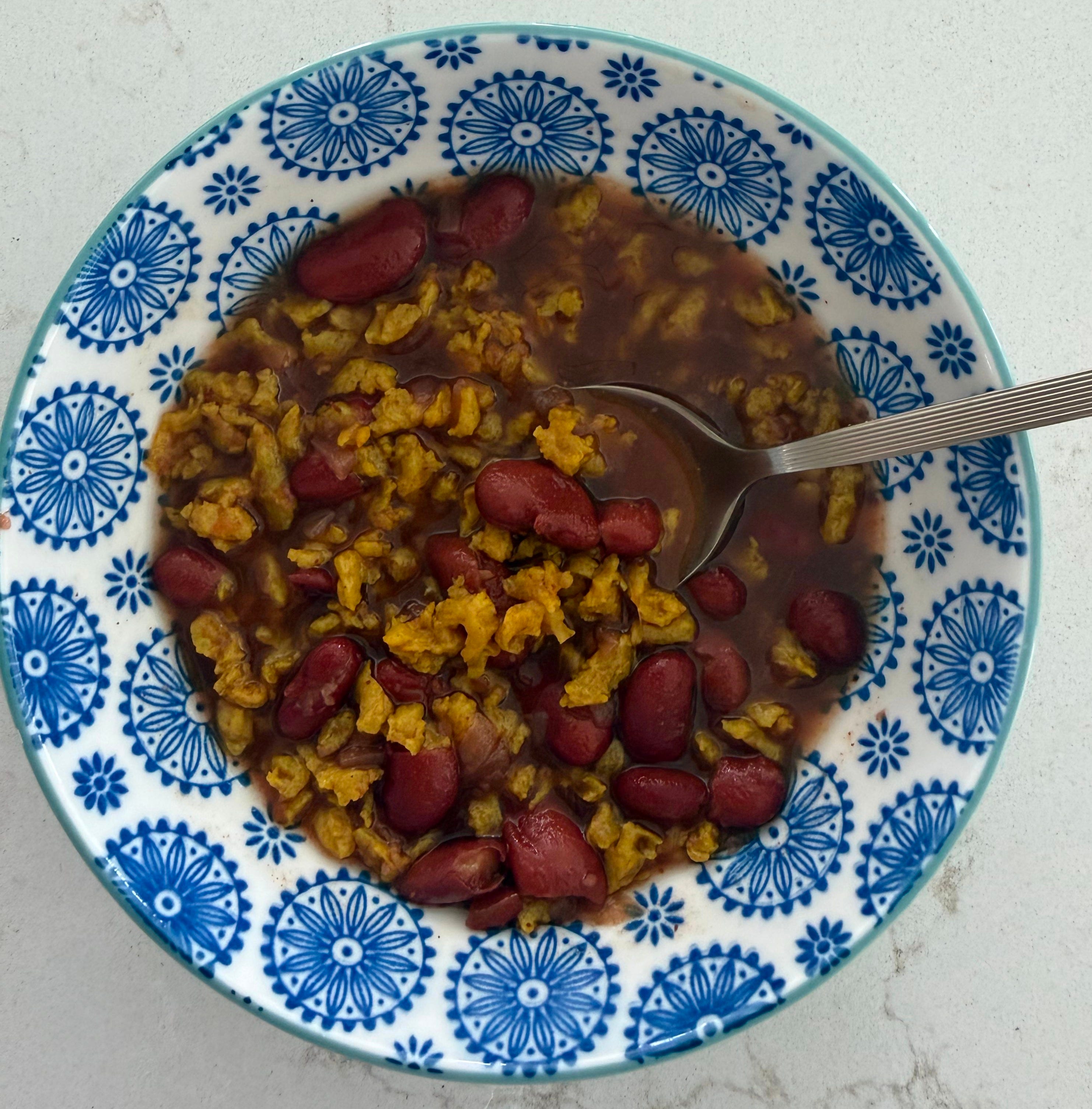
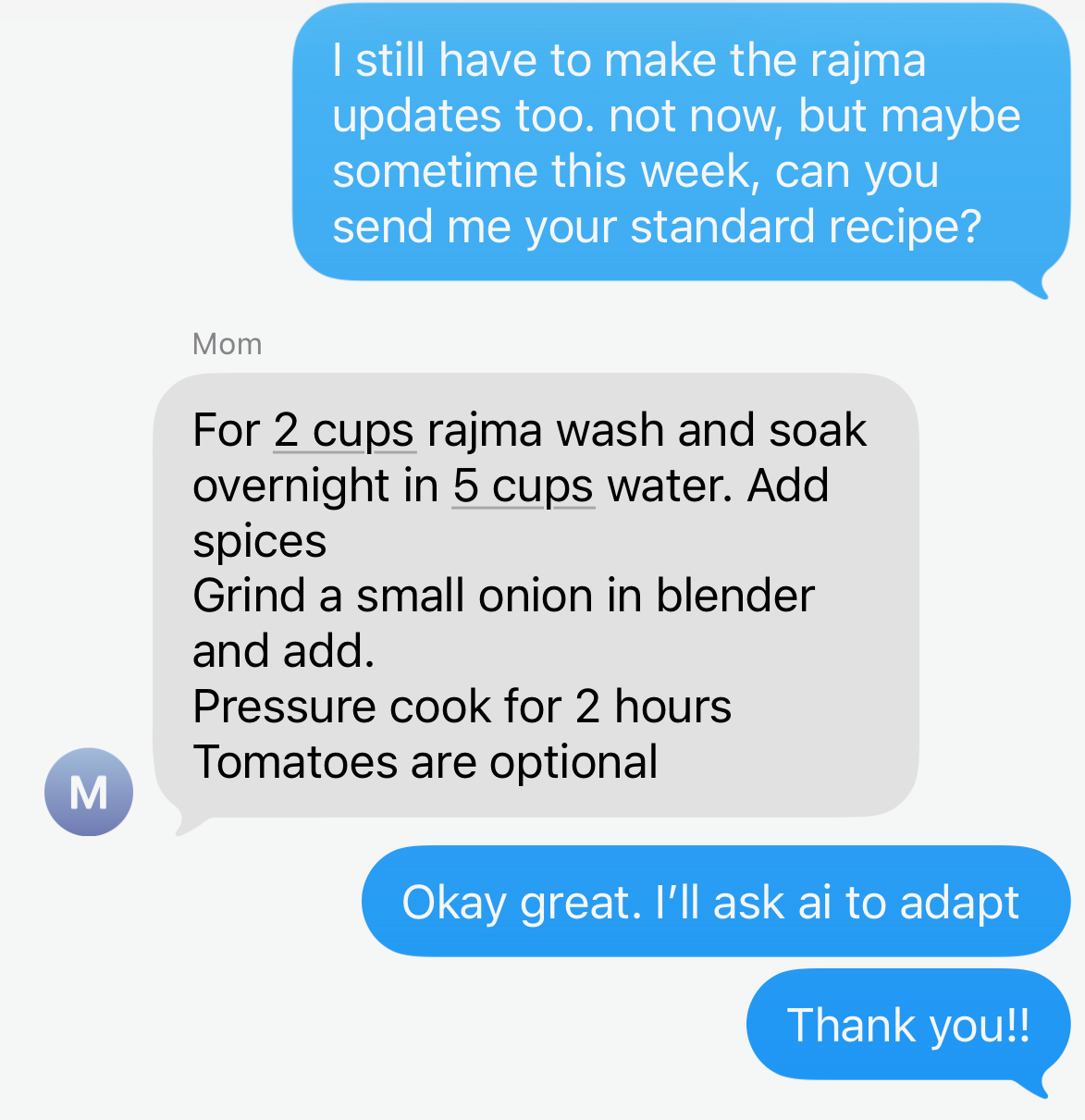
Together, mother and daughter are still figuring the recipe out in real time, amid instinct, incomplete measurements, and our good old robot friends to help fill in the gaps.
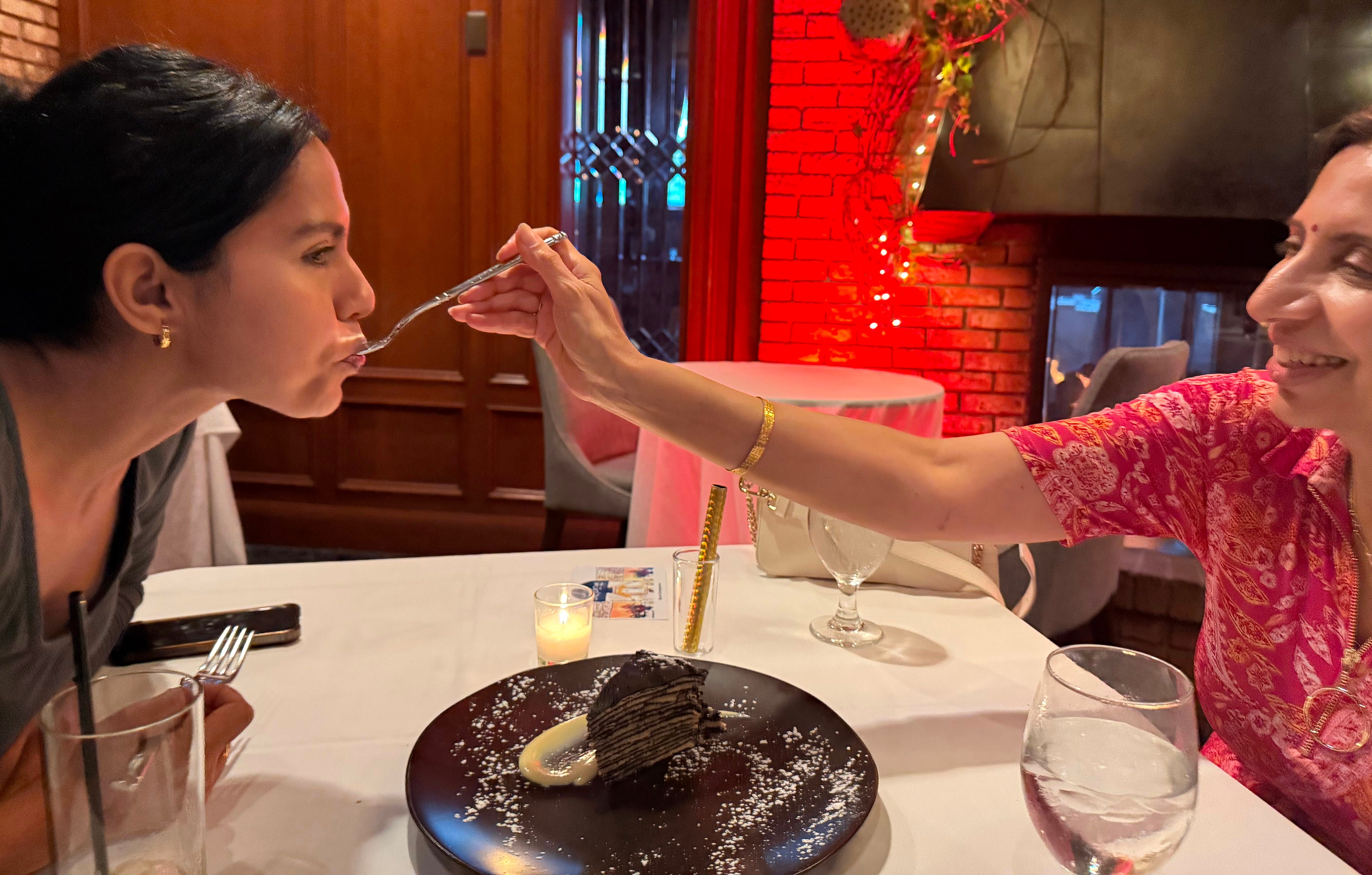
And they’re having some fun together doing it ☺️.
FLAN DE LECHE
A creamy caramel custard and falling in love with condensed milk
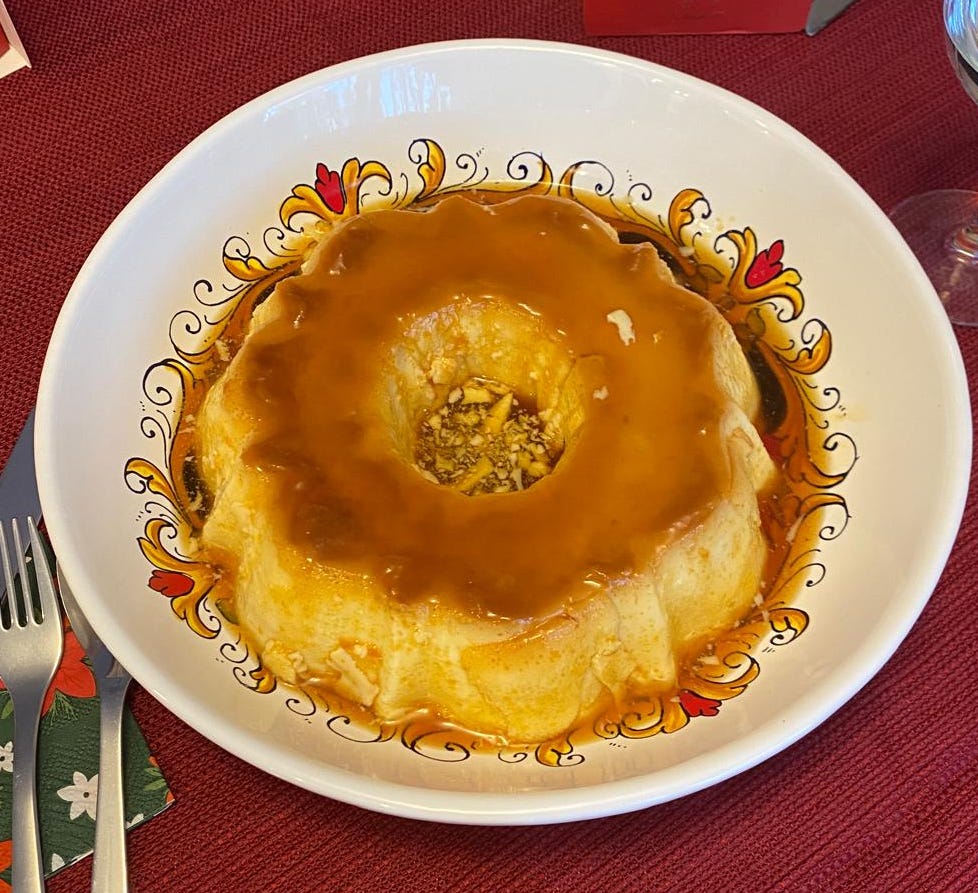
Camilla Krauss shared her mother’s flan de leche recipe because, as she put it, “this is the first recipe that made me think of my mom.” It was also, she added, “my introduction to condensed milk 🤤.”
Patty’s Flan de Leche
Ingredients
4 eggs
½ cup of sugar
1 can of condensed milk
600 cc of 2% or whole milk (equivalent to fill two times the can of condensed milk)
2 teaspoons of vanilla extract
Finely grated zest of an orange (my favorite) or lemon
Preparation
Caramel
A. Prepare a blonde caramel by melting the sugar over low heat and pour into a mold. Make sure it doesn’t burn.
Custard
B. In a bowl:
1. beat the eggs,
2. add the can of condensed milk.
3. Using the same can, fill it twice with milk, that would be the 600 cc.
4. Add two teaspoons of vanilla extract
5. Add orange or lemon zest. (I use the zest of a whole orange or a whole lemon).
Cooking & Cooling
C. Pour the mixture into the mold covered with sugar (A). Cover it with aluminum foil and put it in a water bath in a preheated oven at 350F for 1 hour. To know if it’s ready, a toothpick has to come out clean. (I use a long wood or metal skewer).
D. Once ready, take it out of the oven and let it cool down, still in the water bath (I usually leave it overnight at room temperature).
E. Put it in the fridge for at least 6 hrs.
F. Once cold, Take it from the refrigerator and peel off the edges with a knife and place it inverted in the dish that you want to serve it. The caramel will be on top and it is going to be ready to serve! Enjoy!
JOLLOF RICE
A Sierra Leonean family recipe carried from the kitchen to voice notes across an ocean
“Be careful with that white pepper.”
This warning arrives midway through a voice note Yema Gbondo’s sister-in-law recorded while helping Yema recall her mother’s jollof rice recipe.
Her sister-in-law, you see, preserved the recipe on a visit to the States by taking photos while Yema’s mother cooked the rice; she sent Yema an explanatory voice note to supplement.
(The last three seconds of this clip are my absolute favorite part of this story, and probably will be yours too.)
What emerged, then, was not a formal recipe card, but something organic: a living record of one Sierra Leonean family cooking together, documenting the dish as knowledge moved between generations.


From Laurel to London, the Gbondo jollof lives on.
MANDU
Three generations making Korean dumplings together for the New Year
I asked Esther Asadi to tell me about a food memory connected to her mother, and she almost immediately thought of mandu, the Korean dumplings her family sometimes prepares for Lunar New Year.
For anyone who’s ever made homemade dumplings, you know they are a labor of love. It’s one well worth it: “I’ve gotten to the point where I no longer enjoy eating dumplings elsewhere unless they’re homemade,” Esther laughed. “Because I got spoiled.”
The dumplings themselves, though, almost become secondary to the feeling of everyone gathered around the table making them together.
Esther recounted fondly that a few years ago, the family — mom, older sister, niece and nephew — gathered to make mandu.
“I think that’s something that I miss and appreciate,” she told me as she reflected on three generations of her family together making dumplings. “That’s very nostalgic for me.”
This year also happens to be Esther’s first Mother’s Day after recently welcoming a daughter of her own. That detail struck me as a fitting ending to this issue: it’s a reminder that the traditions we inherit eventually become the ones we carry forward.
Here’s a clip of my (endearing) chat with Esther on making homemade mandu with multiple generations of her family — and trying to figure out whether her mother uses beef or pork in the filling.
If any of today’s stories left you with some feels, or sparked your own food memories, join the convo.
YOUR STORY
I close every issue of the newsletter with an assist to help you preserve your own stories.
Today’s: if you’re spending time or chatting today with your mom, grandmother, auntie, or another person whose food has nourished you, voice record them answering this question:
What’s one dish you make from memory?
If you want to dig deeper, here are a few follow-ups you can ask:
Which ingredient would surprise most people?
Who taught you how to make this in the first place?
How do you know when the dish is ready to be eaten?
If you’re ready to share what you learn, I’d love to read about it and help you preserve it.
Never Precious is curated and published by Tyeesha Dixon.