



Hi — I’m Tyeesha, and I’m on a mission to find and tell the stories of how people are carrying culture forward through everyday food.
Subscribe below to get updates delivered directly to your inbox. No Substack account required.
Hello, family, and welcome to Issue 13.
How’s it already November?
A tai ji classmate, who is retired, told me recently that the older you get, the faster time goes by.
As many of you know, this year has been full of change for me, personally and professionally. My legal career has been challenging and rewarding, but journalism was my first love. So after years in law and government, I’m building Never Precious alongside my consulting practice, making more room for the things in life that give me joy and serenity — connecting with people and the earth, telling stories, traveling, and, well.
Food.
The changes have been exciting. But it’s also hard to keep the chaos of what’s happening around us from seeping in at least a little bit.
A few things keep me grounded. It took me decades to actually believe this, but they are the things in life that are always accessible, if I allow them to be: connection, remembrance, gratitude, generosity.
With the holidays approaching, I’m planning a few issues honoring these simple concepts. I’m excited to bring more voices into Never Precious along the way, with contributors sharing what these ideas look like in their own lives.

Today starts with remembrance. Melissa Bredbenner began writing this essay to tell the story of learning the secret behind her great-grandmother’s beloved chocolate cake recipe.
As she was writing, her grandfather passed away.
She finished the essay, and we’re sharing it with you here today. It’s a good reminder that remembrance can take many forms.
Enjoy 🧡.
An essay honoring remembrance by Melissa Bredbenner
My parents would insist that they “don’t cook.” These were meals made because we had to eat, and we happened to enjoy the dishes enough to keep eating them.
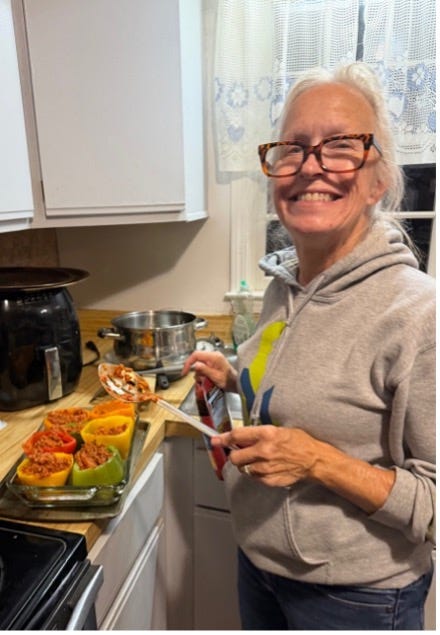
We had plenty of dishes we returned to, though we hadn’t considered making them “traditions.” On weekend mornings, my dad made pancakes, leaving the crunchy brown edges intact for me to pull off before he cut the rest into pieces and let me pour a puddle of syrup on the side. He folded vegetables into egg omelets with sharp cheddar cheese. My mom made an array of rainbow-colored bell peppers stuffed with ground beef and ketchup (the so-called “secret ingredient”), and baked ziti when she knew my brother and I were coming home. It seemed to take hours in the oven as if it were patiently waiting for us to arrive.
Restaurants were a treat, so we stuck to our favorites there, too. At BJ’s on the Water in Ocean City, Maryland, we ordered seafood skins, which were potato wedges topped with crab, shrimp, and scallops, buried under so much melted cheese that it was hard to tell what was underneath. In my younger years, my parents ordered chili at Hard Times Cafe, while my brother and I ate cornbread that spotted the table with crumbs, and spaghetti noodles that glistened with butter.
We knew what we enjoyed and saw little reason to experiment.
My mom did grow up with one tradition.
My great-grandmother, whom my mother adored, loved baking. Every holiday season, my great-grandmother made a chocolate cake for each family member. My mom still remembers the rich, spongy dessert topped with pale gray icing.
After years of enjoying her grandmother’s cakes, my mom finally asked for the recipe. My mom didn’t bake, but her grandmother was getting older, and she wanted to make sure the recipe wouldn’t be lost.
Her grandmother sent her to the pantry — a dark, cold room in the back of the kitchen. Years later, my own family lived in that house, and I remember the pantry’s shelves seeming endless, with cans and jars reaching as far back as I could see. My mom swears the smells of her grandmother’s cooking were memorialized in that pantry — she often described scents of orange cake and lemon cookies emanating from its walls long after her grandmother was gone.
There it was, Hershey’s “Perfectly Chocolate” Chocolate Cake and “Perfectly Chocolate” Chocolate Frosting. My great-grandmother’s beloved recipe was on the back of the Hershey’s cocoa can. Our family recipe was available to anyone who wandered down the baking aisle.
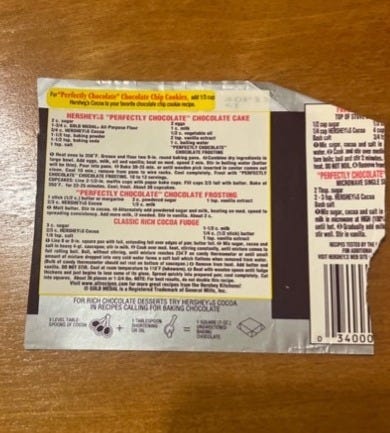
When her grandmother died, my mom thought it would be nice to bake the cakes for family members who wouldn’t get one that year. She followed the instructions on the can. The act was therapeutic and thoughtful, but she never baked them again.
My grandfather’s favorite restaurant was five minutes from his house. When he was younger, I imagine it offered a respite from the demands of being a working-class man. As he grew older, his weekly visits became one of the ways he maintained his independence. As long as he could make the trip there, Wednesdays could still be Wednesdays.
A few months before he died, I went with him one last time. He was using a walker and moving so slowly and unsteadily that I followed behind him in a kind of procession, making sure he didn’t fall, as we made our way to the part of the restaurant he loved. But he still did it, and in that moment it didn’t matter how long the walk took, but that he could take it.
My grandfather passed away a few weeks ago. After his funeral, we headed to the bar and restaurant he visited every Wednesday afternoon for decades. When I approached his usual spot, I was surprised — and moved — to find that the staff had saved his seat one last time.
Earlier that day, some of the patrons he regularly sat with had, unexpectedly to us, shown up at his service. They told us stories about their afternoons with my grandfather and described friendships they had built over the years. They were people my family barely knew, if we knew them at all, but who had spent countless hours with him. It was striking to realize all that his seemingly simple weekly routine held.
I hadn’t known how many people would miss seeing him on a Wednesday.
I had always thought of “traditions” as something more deliberate, like recipes that families pass down through generations, holiday dishes made the same way every year, or instructions someone took care to write down. But our traditions were just things we did, again and again, because we loved them. We made dinner, ordered the usual, thought of the people around us. It’s funny how traditions actually take shape that way.

My mom and I talked about making my great-grandmother’s chocolate cakes again, though not much progress has been made. Even so, we still have the meals my parents made, the restaurants we returned to.
And the story of my mother discovering that her grandmother’s famous cake came from a cocoa can.
How do you remember loved ones through food?
Never Precious is published by Tyeesha Dixon,
with production support from Deseree Chacha.