



Hi — I’m Tye, and I’m on a mission to find and tell the stories of how people are carrying culture forward through everyday food. Follow along by subscribing below. No Substack account required.
Hello, family, and welcome to Issue 11.
This weekend, cultures around the world have been celebrating the harvest moon. In South Korea, where my maternal family is from, chuseok (추석) is a multi-day public holiday. Families gather to celebrate bountiful harvest, pay respect to their ancestors, and eat.
Westerners have compared chuseok to American Thanksgiving, and I suppose they’re right insofar as families are supposed to gather to show gratitude for something bigger than us all.

For chuseok, though, gathering extends beyond the living. Families traditionally hold a memorial rite called charye (차례), where food and drink are laid out for ancestors as offerings, which take days to prepare, before the living family partakes.
Like everywhere, it seems, traditional observance is waning. In a recent national survey in South Korea, only 30 percent of surveyed adults said they planned to observe charye this year.1 Not many more said they even considered ancestral rites necessary anymore.
So now what?
Tufurahi pamoja — let us rejoice together.
My close friend and colleague Melanie wrote a piece for Issue 2 about her mother’s mbuzi mkorogo, a Tanzanian sautéed goat dish passed down from her own late mother.
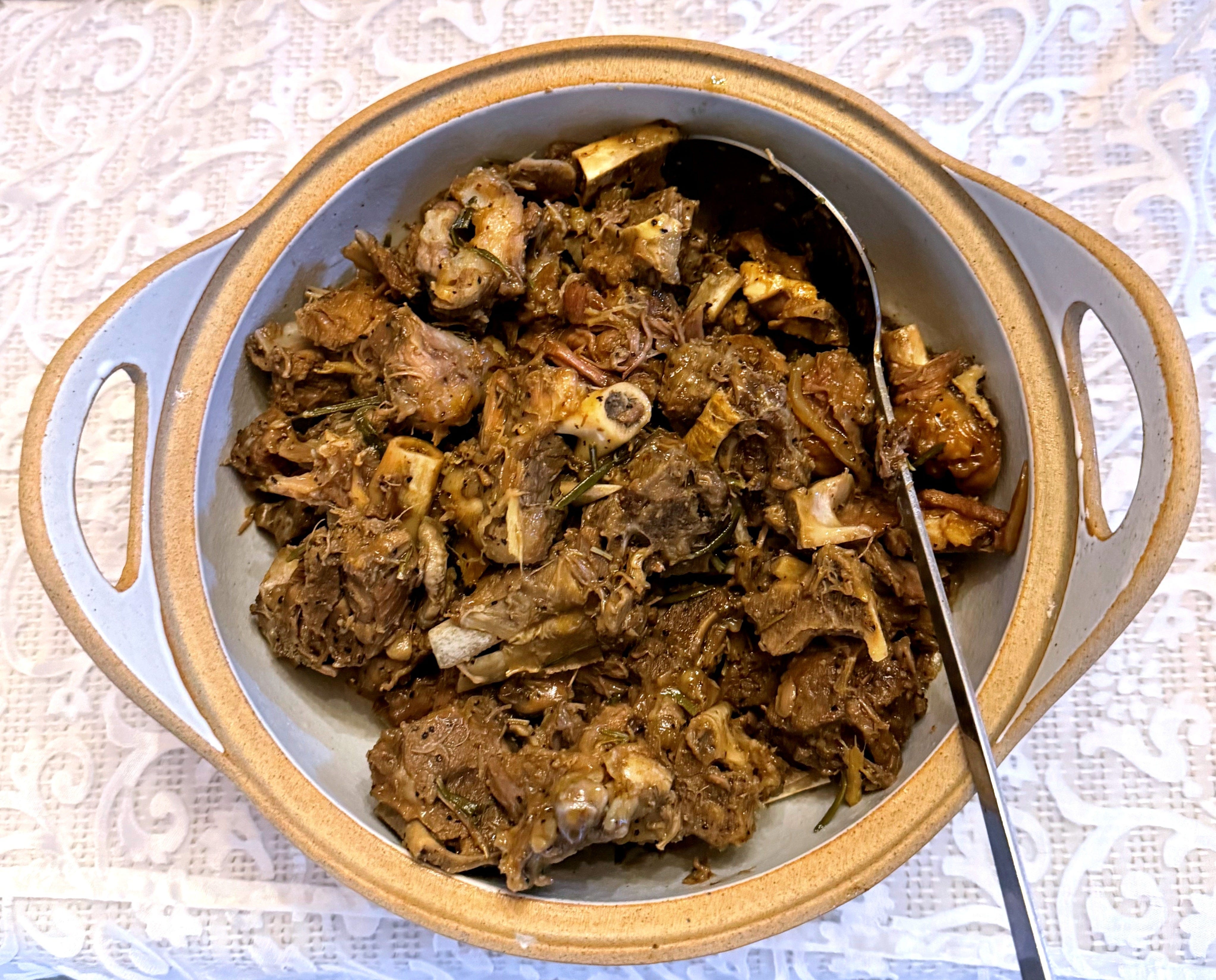
Recently, Melanie’s mother invited me to join a small gathering she was hosting at her home. She would be cooking mbuzi mkorogo.
I would not — could not — pass up the opportunity to try the mbuzi for myself.
I was hungry for more than just goat. Recently divorced and still figuring out my new normal, I was frequently longing for the kind of comfort that comes from a traditional home-cooked meal, and the fellowship that accompanies it.
When I opened the Paperless Post invitation, Melanie’s mom had entitled the event Tufurahi Pamoja. I learned that this phrase means let us rejoice together in Swahili.

It seems that no matter the cuisine or culture, the familiarity of a traditional meal being prepared conjures up feelings of home. I certainly felt it that day: the smell of herbs and meat stewing, large pans and serving dishes waiting to be filled, kisses, chatter, and delight! as new guests trickled in for hours.
Surprising no one, the mbuzi was bussin. The goat cooked tender in fresh ginger and rosemary was like nothing I’d ever eaten.
But have you ever been in a room full of aunties you’ve never met before and felt like you were being hugged, all day, when you needed it the absolute most?
Old traditions, new tables
Many people in the survey about chuseok didn’t consider observing ancestral rites necessary. But most of them — 81 percent — said that getting together with family around the holiday is.
Modern life can make it hard to follow tradition qua tradition. But I’ve learned that a lot of growing up is doing your best. And being present enough to recognize when our ancestors find other ways to reach us.
There’s a saying associated with chuseok that roughly translates to: may every day be like the day of the harvest.
Here’s to making this day more bountiful than the last.
What have you learned at others’ tables about your own?
SOMETHING ROOTED (NEVER PRECIOUS)
Something passed down — a recipe, a ritual, a way of doing things — sometimes in its original form, sometimes adapted for the lives we’re actually living.
The star of the chuseok table is songpyeon (송편) — bite-sized rice-dough cakes stuffed with sweet bean or sesame filling, steamed with pine needles, and coated lightly in sesame oil to keep them from sticking together.
Traditionally shaped like half-moons, songpyeon symbolize the waxing moon transitioning from new to full, holding the promise of growth and good fortune to come.
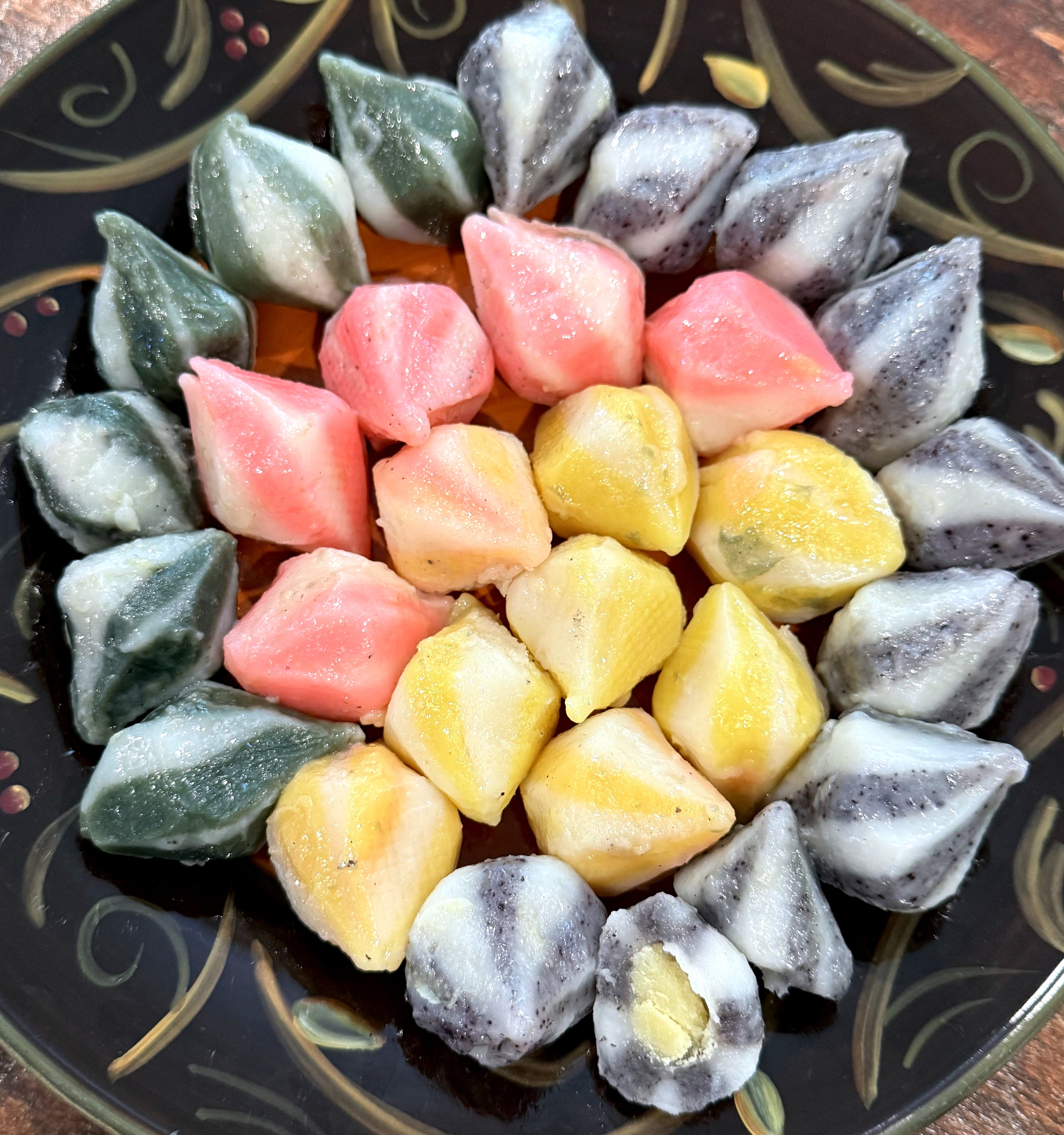
The magic seems to happen in the dough. You can’t use too much water because it’ll get soggy, but it also has to be wet enough to form the dough properly. It’s tricky with rice flour.
My own mother remembers her childhood in Korea, taking rice to the mill to get it ground to make songpyeon and then preparing the delicacies with her family, using natural ingredients to dye them different colors — pink, green, yellow.
“We only made them for chuseok, so it was very special.”
I’m not sure how many of us are making songpyeon from scratch these days, but if you’re feeling froggy, here’s a recipe to try from one of my go-to Korean home-cooking sites, Korean Bapsang. Her recipes haven’t failed me yet.
RECS N THANGS
Things to eat, read, watch, explore.
READ.
I Loved Chuseok. I Hated It Too. — Youngsik Youn
This is a deeply personal and affecting essay I came across during my research. The author grapples with complicated feelings about chuseok that I think many of us can relate to: traditions can hold joy, resentment, and longing all at once.
The question Youn poses at the end — If nothing requires us to gather anymore, what will bring all of us together again? — was an inspiration for my own chuseok reflection.
EAT. EXPLORE.
Siroo & Juk Story — Ellicott City, Maryland
I came across this cafe while looking for songpyeon last week. It was the name that drew me in. You don’t see a lot of restaurants in the States that center around juk (죽). It’s the Korean version of congee, a warm and comforting savory rice porridge.
It’s a hug in a bowl — and who doesn’t need one of those these days?
The cafe is casual, but they have lots of different juk varieties, a full menu of homestyle Korean dishes, and desserts to boot. Worth stopping in.
This issue is dedicated to my late grandfather.
더도 말고 덜도 말고 늘 한가위만 같아라.
Never Precious is published by Tyeesha Dixon,
with production support from Deseree Chacha
(whom I met at Tufurahi Pamoja).
Korea Research Co., 2026 Chuseok Holiday Gathering and Schedule Planning, Sept. 15, 2026, https://hrcopinion.co.kr/archives/37711.
This was such a lovely read! Coming from a family that often hosts holiday gatherings, it made me more mindful of all the sacred moments that are shared. I hope that as the years go on I continue to remember that it doesn’t have to be perfect, but getting together with loved ones is oh so worth it.